
Appetizers
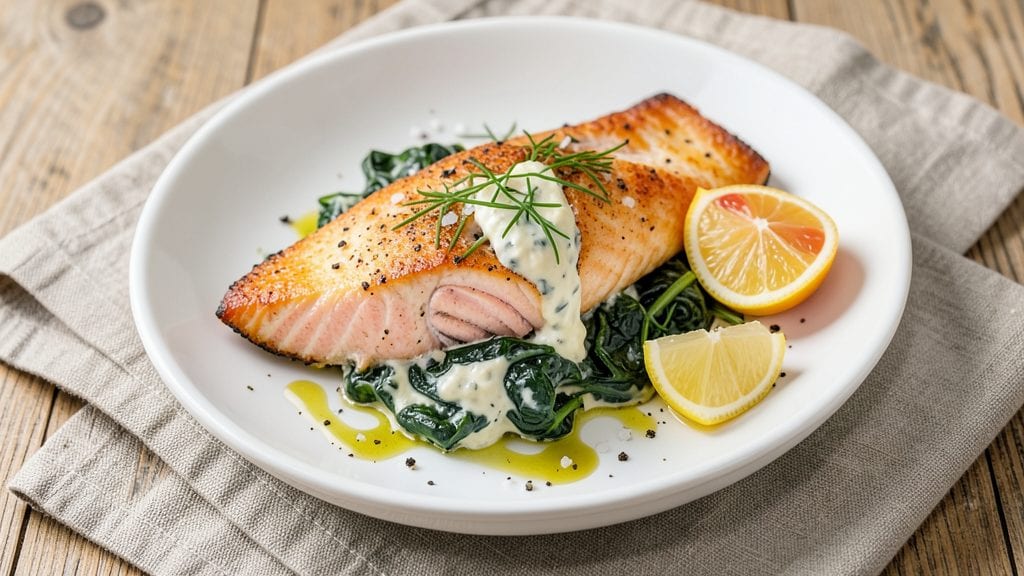
This baked salmon stuffed with spinach and cream cheese delivers restaurant-quality results in just 20 minutes—no fancy techniques required. The herb-infused cream cheese center creates a velvety, savory filling that pairs perfectly with the flaky salmon, making this a standout pescatarian dish.
I developed this recipe after years of testing different stuffing combinations, and this version consistently earns rave reviews.
The key to success lies in the balance of flavors and textures: tender spinach wilted just enough to hold its shape, rich cream cheese that melts into a luscious center, and fresh herbs that brighten every bite.
This recipe uses simple, high-quality ingredients that come together effortlessly, yet the result is anything but basic. The salmon stays moist while the filling bakes to golden perfection, creating a dish that feels indulgent yet remains light enough for any meal.
By the time you pull this dish from the oven, you’ll have beautifully browned salmon with a creamy, herbed center that practically melts in your mouth.
The aroma alone will have everyone gathered at your table, and the presentation—elegant yet approachable—makes it perfect for dinner parties or a special weeknight dinner. The best part? It’s a complete meal with minimal cleanup.
Whether you're serving this as a main course or an impressive appetizer, the combination of flaky salmon and creamy filling ensures every bite is satisfying. Pair it with a crisp white wine or a fresh salad to round out the meal. Let’s get started—this recipe is easier than you think!
Ingredients for baked salmon stuffed with spinach and cream cheese
Four salmon fillets, spinach so tender it melts, and cream cheese that transforms into golden perfection.
| Ingredient | Amount | Notes |
|---|---|---|
| Fresh Atlantic Salmon Fillets 🐟 | 4 whole | Skin-on, 6 oz each |
| Baby Spinach Leaves 🌿 | 4 cups | Packed, stems removed |
| Full-Fat Cream Cheese 🧈 | 8 oz | Room temperature preferred |
| Fresh Dill 🌿 | ¼ cup | Chopped, stems removed |
| Fresh Chives 🌱 | 2 tbsp | Finely chopped |
| Garlic Cloves 🧄 | 2 cloves | Minced, fresh preferred |
| Extra-Virgin Olive Oil 🫒 | 1 tbsp | For brushing salmon |
| Lemon Juice 🍋 | 1 tbsp | Freshly squeezed |
| Sea Salt 🧂 | 1 tsp | Fine grain preferred |
| Black Pepper 🌶️ | ½ tsp | Freshly ground |
| Dijon Mustard 🍯 | 1 tsp | For cream cheese blend |
| Unsalted Butter 🧈 | 1 tbsp | Softened, for salmon |
The salmon is everything here. Wild-caught Atlantic has the best flavor and texture—Trader Joe's or Whole Foods carry great options. Look for fillets with even thickness, about 1-inch wide. If you can't find wild, farmed is fine, but avoid anything with a fishy smell. The spinach? Baby spinach is ideal—it wilts faster and keeps its vibrant color. I always grab the organic kind (the non-organic can taste bitter). For the cream cheese, Philadelphia brand is my go-to—it's smooth and reliable, but any full-fat works. Room temperature is key—take it out of the fridge 20 minutes before using.
No fresh dill? Dried dill at one-third the amount works in a pinch, but fresh is worth it. Short on chives? Green onion tops give a similar bright note. The Dijon mustard adds depth—skip it if you're sensitive to tang, but trust me, it makes the filling richer. For the olive oil, Kirkland Signature or California Olive Ranch are great budget picks. The butter? Plugrá or Land O'Lakes are solid choices, but if you're feeling fancy, grab some European-style butter from Costco. The lemon juice should be fresh—bottled just doesn't cut it here.
This dish reheats beautifully—just pop it in the oven at 375°F for 5-7 minutes. The filling stays creamy, and the salmon flakes perfectly. Store leftovers in an airtight container for up to 2 days in the fridge. For longer storage, freeze the baked salmon (without the filling) for up to 3 months). Prep the filling ahead of time—it keeps in the fridge for 1 day if sealed tightly. I always make a double batch of filling because it's so versatile—great on toast, in wraps, or even as a dip.
Why You'll Love This Recipe
- One-Pan Magic: I swear by this trick—just butter the salmon, stuff it with wilted spinach and that tangy cream cheese, and pop it in the oven. No chopping boards, no extra pans, just hands-off perfection while you stir a side dish or throw together a salad.
- Creamy-Green Dream Team: That full-fat cream cheese melts into the salmon like a hug, while the spinach adds a fresh bite. Honestly, the combo of rich, herby, and slightly crispy edges? It’s the kind of flavor that makes you pause mid-bite—even my picky husband doesn’t fake it.
- Weeknight to Weekend: Make it for a busy Tuesday, then double the batch for Friday’s dinner party. The leftovers reheat beautifully, and the bright chives and dill make it feel fancy without the fuss. (Yes, even on a Tuesday night.)
- Budget-Friendly Luxury: Salmon feels special, but this recipe stretches it—stuffing it with spinach and cream cheese means you’re feeding more people for less. I’ll be real: it’s my go-to when I want restaurant-quality without the price tag.
Step-by-step instructions for baked salmon stuffed with spinach and cream cheese
Here's how to create a restaurant-worthy stuffed salmon—juicy, herby, and packed with flavor.
Prepare the Herb-Infused Cream Cheese Filling
In a medium bowl, combine the 8 oz full-fat cream cheese, 1 tbsp lemon juice, 1 tsp Dijon mustard, 0.25 cup chopped fresh dill, 2 tbsp finely chopped fresh chives, 2 cloves minced garlic, 1 tsp sea salt, and 0.5 tsp black pepper. Using a fork or small spatula, mix until smooth and fully combined. This mixture should be thick but spreadable—if it's too stiff, add 1 tsp lemon juice at a time until it reaches the right consistency.
I like to press the mixture through a fine-mesh sieve to remove any large herb pieces, ensuring a silky texture. Set the filling aside while you prepare the salmon. The lemon juice brightens the cream cheese, while the Dijon mustard adds a subtle tang that balances the richness.
Create Slits in the Salmon and Stuff with Spinach
Preheat your oven to 400°F and line a baking sheet with parchment paper. Using a sharp knife, make 4-5 parallel cuts (about 1 inch apart) along the center of each of the 4 whole fresh Atlantic salmon fillets, being careful not to cut all the way through. Gently open the fillets like a book to create pockets.
In a large skillet, heat 1 tbsp extra-virgin olive oil over medium heat. Add the 4 cups packed baby spinach leaves and sauté for 2-3 minutes until just wilted. Season with a pinch of sea salt and black pepper, then transfer the spinach to a plate and let it cool slightly. Spoon the spinach into the pockets of each salmon fillet, pressing it down gently to fill the spaces completely.
Spread the Cream Cheese Filling and Season the Salmon
Using a spoon or your fingers, spread the herb-infused cream cheese filling evenly over the spinach in each fillet. The filling should peek out slightly from the sides—this ensures it stays in place while baking. Rub the tops of the salmon with the 1 tbsp softened unsalted butter, then season generously with any remaining sea salt and black pepper. The butter adds richness and helps create a golden crust.
Here's the thing—don't overstuff the salmon. If the filling bulges too much, it might leak out during baking. A light, even layer ensures the salmon cooks through evenly without falling apart.
Bake Until Flaky and Golden
Place the stuffed salmon fillets on the prepared baking sheet, skin-side down if the skin is intact. Bake for 12-15 minutes until the edges are golden brown and the internal temperature reaches 145°F when measured with an instant-read thermometer. The salmon is done when it flakes easily with a fork and the cream cheese filling is just set but still soft.
If the top isn't browning quickly enough, broil for 1-2 minutes at the end, watching closely to avoid burning. The spinach should be tender but still vibrant, and the cream cheese filling should be warm and creamy. Let the salmon rest for 3-5 minutes before serving—this keeps the filling intact and makes slicing easier.
Serve with Fresh Herbs and Lemon
Garnish each fillet with an extra sprinkle of chopped fresh dill and a drizzle of lemon juice for brightness. Serve immediately with steamed asparagus, roasted potatoes, or a fresh salad. The contrast of the warm, creamy salmon with the crisp, bright greens is what makes this dish special.
This recipe is all about balance—rich, creamy, herby, and bright all in one bite. The key is timing: the salmon needs to be cooked just enough to set the filling but not so long that it dries out. Trust your thermometer, and you'll nail it every time.
Pro Tips For Making Baked Salmon Stuffed With Spinach And Cream Cheese
- Preheat Like It’s 1999: Your oven should hit 425°F (220°C)—any lower and the salmon risks turning into sad, gray mush. I used to skimp here, thinking it’d bake slower, but the cream cheese filling needs that heat to meld properly. Preheat for 15 minutes with the rack in the middle—this isn’t a guess.
- Wilt Spinach Properly: Dump the baby spinach into a dry skillet and let it collapse under its own weight—no oil, no water. You’re not sautéing; you’re just softening. Overcrowding? No, just one layer so it wilts evenly. Cold spinach in your filling makes the texture weird, and nobody wants that.
- Don’t Overstuff the Salmon: The cream cheese-spinach mix should barely peek out when you fold it into the fillet. I learned this after one disastrous batch where the filling oozed everywhere like a bad soufflé. Press it in gently—this isn’t a competition for who can fit the most in there.
- Bake Covered, Then Uncover: Start with foil tented loosely over the salmon for the first 10 minutes—this traps steam so the spinach stays bright and the cream cheese doesn’t curdle. Then remove the foil and bake uncovered for the last 5-7 minutes to let the top crisp slightly. Trust me, the contrast makes all the difference.
Dietary considerations for these flavors
Gluten-Free Adaptation
This recipe is naturally gluten-free, making it perfect for those avoiding gluten or following a gluten-free diet. The ingredients—salmon, spinach, cream cheese, and fresh herbs—contain no gluten naturally. Just ensure your Dijon mustard is gluten-free (most brands are, but check labels), and you’re good to go.
I always double-check the mustard because some varieties contain hidden gluten. 🌾
Dairy-Free Option
For a dairy-free version, swap the cream cheese for dairy-free cream cheese (like Kite Hill or Miyoko’s), which mimics the texture beautifully. Use the same ratio—8 oz—and follow the same preparation steps.
The filling will still be creamy and flavorful, though slightly lighter in texture. Pair it with dairy-free butter if you’re avoiding all dairy.
Low-Carb Considerations
This dish is already low-carb, with the spinach and salmon providing fiber and protein without added carbs. If you’re tracking macros, watch the cream cheese—it’s higher in fat but has minimal carbs.
For a lower-fat option, use light cream cheese (about 4 oz), but the flavor won’t be as rich. The filling remains keto-friendly as long as you avoid high-carb sides like bread or potatoes.
Allergen Awareness
This recipe contains dairy (cream cheese, butter) and fish (salmon). If you have allergies, substitute the cream cheese with a dairy-free alternative and ensure your salmon is fresh and properly handled.
For nut allergies, this dish is safe—just avoid cross-contamination if other nut-based dishes are nearby. Always check ingredient labels for hidden allergens, like added spices or mustard blends.
Vegetarian Substitution
While this dish is pescatarian, you can adapt it for vegetarians by replacing the salmon with firm tofu or tempeh. Press the tofu to remove excess water, then slice it into fillets.
Use the same stuffing method, but reduce the baking time to 10-12 minutes at 375°F—tofu cooks faster than salmon. The texture won’t be identical, but the herbed filling shines just as well. 🥬
Nutrition facts
Frequently asked questions
Can I use frozen salmon for this recipe?
Yes, but thaw it properly first. Place frozen salmon in the refrigerator for 24 hours or use the quick thaw method: seal in a leak-proof bag and submerge in cold water (change water every 30 minutes). Never thaw at room temperature—it promotes bacterial growth. Pat the fillets dry before stuffing to ensure a good sear.
What if my cream cheese filling leaks out while baking?
This happens when the filling is too thick or the cuts are too deep. For next time, make sure your cream cheese mixture is spoonable but not runny, and keep the salmon cuts shallow (½-inch deep). Also, place the stuffed fillets on a wire rack over a baking sheet to allow air circulation—this helps the filling set faster without spilling.
How can I make this dish ahead of time?
Prepare the filling up to 1 day ahead and store it in an airtight container in the fridge. Assemble the stuffed salmon 2 hours before baking and refrigerate uncovered (this helps the filling firm up slightly). When ready to bake, let it sit at room temperature for 15 minutes first. The filling will still be creamy but won't leak as easily.
Can I substitute other greens for spinach?
Try kale (massage with oil first) or swiss chard (remove stems). Avoid watery greens like romaine—they'll make the filling soggy. For a bolder flavor, add 1 tbsp chopped sun-dried tomatoes or ½ tsp smoked paprika to the filling. Just reduce any added liquid by 1 tbsp to maintain the right consistency.
Why did my salmon turn out dry?
Overcooking is the most common cause. Use an instant-read thermometer—salmon is done at 145°F internal temperature. If you don't have one, pull it out when the edges are golden and the center is just opaque (about 12-14 minutes at 400°F). For extra moisture, brush the fillets with 1 tbsp melted butter before baking, and avoid cutting into them until they've rested for 5 minutes.