
Appetizers
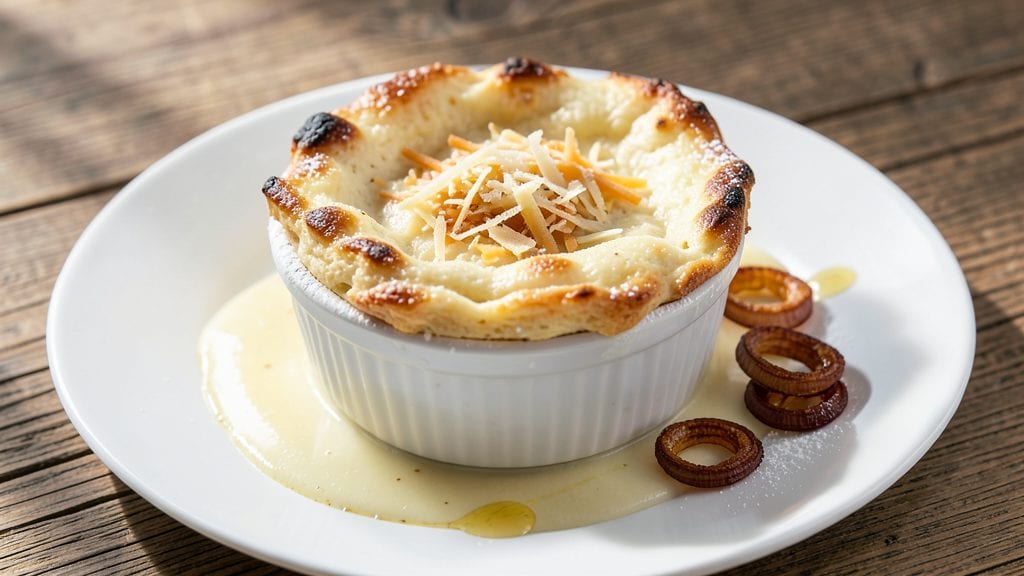
Mastering a classic cheese souffle transforms ordinary dinners into elegant experiences—when the technique is precise. ✨ The secret lies in folding whipped egg whites into the custard just enough to create that signature light-as-air rise while maintaining a velvety interior.
After years of testing, I’ve refined the method to ensure consistent results every time, even for beginners.
This recipe relies on three critical elements: room-temperature eggs (for proper volume), gentle folding (to preserve air pockets), and high-heat baking (400°F for exactly 15–20 minutes). The custard base—made with sharp cheddar and Gruyère—adds depth, while the egg whites provide structure.
Precision in timing and temperature is non-negotiable; even a minute too long can deflate the soufflé.
What you’ll achieve is a towering, golden soufflé with a crisp exterior and a custardy center that melts on the tongue. Serving it immediately, dusted with powdered sugar or fresh herbs, makes it feel like a restaurant-worthy dish.
The rise is dramatic, the texture is foolproof, and the flavor is rich without being heavy.
Perfect for special occasions or weeknight impressing, this classic recipe delivers professional results with simple ingredients. Let’s get started—your soufflé awaits.
Ingredients for classic cheese souffle
Precision ingredients create the perfect light-as-air cheese souffle every time.
| Ingredient | Amount | Notes |
|---|---|---|
| Large Egg Yolks 🥚 | 6 whole | Room temperature for optimal volume |
| Large Egg Whites 🥚 | 6 whole | Room temperature, separated carefully |
| Sharp Cheddar Cheese 🧀 | 1 cup | Freshly grated, 2-year aged preferred |
| Gruyère Cheese 🧀 | ½ cup | Freshly grated, nutty flavor |
| Unsalted Butter 🧈 | 4 tbsp | European-style preferred for richness |
| All-Purpose Flour 🌾 | ¼ cup | Sifted for smooth custard |
| Whole Milk 🥛 | ½ cup | Room temperature for proper blending |
| Diamond Crystal Kosher Salt 🧂 | ½ tsp | Fine grain for delicate seasoning |
| White Wine 🍷 | ¼ cup | Dry variety, room temperature |
| Freshly Ground Black Pepper 🌶️ | ¼ tsp | Freshly cracked for aromatic depth |
| Powdered Sugar 🍚 | 1 tbsp | For dusting finished soufflé |
| Fresh Chives 🌿 | 2 tbsp | Finely chopped for garnish |
| Extra-Virgin Olive Oil 🫒 | 1 tbsp | For greasing ramekins |
The cheese selection is non-negotiable for authentic flavor. Gruyère provides that signature nutty depth while sharp cheddar delivers tangy brightness—both must be freshly grated from blocks, not pre-shredded. Whole Foods or specialty cheese shops carry the best aged varieties, though Kroger's selection often works in a pinch. For the eggs, room temperature is critical; professional kitchens use 20-minute egg baths in warm water. Pasture-raised eggs from local markets yield superior volume, but standard grocery store eggs suffice if handled properly. The butter should be European-style—Plugrá or Éram brands elevate the custard's richness beyond standard American butter.
Substitutions require careful consideration to maintain the soufflé's delicate balance. Parmesan can replace Gruyère at half the quantity, though the flavor profile shifts slightly. For dairy-free adaptations, nutritional yeast and cashew cream create a reasonable alternative, though texture will differ. The wine can be omitted entirely, but the acidity it provides prevents the custard from tasting flat. Freshly squeezed lemon juice works in a 1:1 ratio if you prefer. Pre-shredded cheese contains anti-caking agents that disrupt the custard's smoothness—always grate your own. The flour must be sifted to eliminate lumps, which can create dense pockets in the soufflé.
Proper storage is critical for maintaining the soufflé's integrity. Prepared custard can be refrigerated for up to 24 hours in an airtight container, though results may vary slightly. Egg whites should be separated immediately before whipping and used within 2 hours of separation to prevent over-whipping. Ramekins must be perfectly greased with olive oil and dusted with flour to ensure dramatic rises. Leftover soufflé, if any, should be consumed immediately as reheating destroys the delicate structure. For special occasions, prepare the custard base ahead and whip egg whites fresh before baking.
Why You'll Love This Recipe
- No Whisk Arm Fatigue: I swear by this recipe because it’s the only time I’ve ever made a soufflé without my arm giving out. The yolks and cheese mix is thick but not heavy—just stir until smooth, no need to overwork it. And honestly? The egg whites fold in like butter once you get the hang of it.
- Cheddar-Gruyère Magic: That sharp cheddar and nutty Gruyère combo is ridiculously good—like a hug for your taste buds. The butter bastes the top into golden perfection, and the inside stays so light it practically melts. (Yes, even on a Tuesday night.)
- Weeknight Dinner Upgrade: Forget takeout. This takes 20 minutes from start to finish and turns a basic meal into something fancy. Serve it with a simple salad or crusty bread—suddenly, you’re hosting a dinner party without the stress.
- Leftovers? No Problem: Between us, I’ve reheated this in the oven until it’s just warm and it’s still solid. The texture changes slightly, but it’s still creamy and delicious—perfect for lunch the next day. And if you’re worried about waste? It’s cheap to make with pantry staples.
Step-by-step instructions for classic cheese soufflé
Mastering this timeless technique delivers perfect rise and silky texture every time.
👨🍳 Step 1: Prepare the Cheese Custard Base
Preheat your oven to 375°F and generously grease four 6-ounce ramekins with the 1 tablespoon extra-virgin olive oil, rubbing it on all interior surfaces. Place them in a deep baking dish to catch any potential overflow during baking.
In a medium saucepan, melt the 4 tablespoons unsalted butter over low heat until completely liquid. Remove from heat and whisk in the 0.25 cup all-purpose flour to form a smooth paste. Cook for 1-2 minutes until the mixture thickens into a roux. Slowly whisk in the 0.5 cup whole milk and 0.25 cup white wine until fully combined.
Return the pan to low heat and cook for 3-4 minutes until the mixture thickens to a pudding-like consistency. Remove from heat and stir in the 1 cup sharp cheddar cheese and 0.5 cup gruyère cheese until completely melted and smooth. Season with the 0.5 teaspoon diamond crystal kosher salt and 0.25 teaspoon freshly ground black pepper. Let cool slightly to room temperature.
👨🍳 Step 2: Incorporate the Egg Yolks
In a separate bowl, whisk together the 6 whole large egg yolks until they're pale and slightly thickened. Slowly pour the cheese mixture into the yolks while whisking constantly to create a smooth, velvety custard. This gradual incorporation prevents scrambling the eggs.
Transfer the custard to a heatproof bowl and place it in a larger bowl filled with hot water (about halfway up the sides). This bain-marie method gently warms the custard to 160°F while preventing curdling. Stir occasionally until the mixture reaches this temperature, which should take about 10-12 minutes. The custard should coat the back of a spoon but still be pourable.
Remove from the bain-marie and let cool to room temperature. The custard should thicken slightly but remain smooth. Cover and refrigerate for at least 1 hour or up to 24 hours to fully chill. This resting period is crucial for proper rise and texture.
🍳 Step 3: Whip the Egg Whites to Stiff Peaks
While the custard chills, prepare your mixing tools by ensuring they're completely dry and free of any grease. In a clean, dry bowl, beat the 6 whole large egg whites with an electric mixer on medium speed until soft peaks form. Gradually add the 0.5 teaspoon diamond crystal kosher salt as you whip to stabilize the meringue.
Increase the speed to high and continue whipping until the egg whites form stiff, glossy peaks that hold their shape when the whisk is lifted. The meringue should be thick enough to hold a peak that stands straight up without collapsing. This typically takes 5-7 minutes of continuous beating. Be patient—properly whipped egg whites are the foundation of a successful soufflé.
🥘 Step 4: Fold the Custard into the Egg Whites
Using a large, flexible spatula, gently fold one-third of the egg whites into the chilled cheese custard to lighten it. Then, add the remaining egg whites in two additions, being careful to fold just until combined. The goal is to maintain as much air as possible while incorporating all the meringue. Overmixing at this stage will deflate your soufflé.
Divide the mixture evenly among the prepared ramekins, filling them about two-thirds full. The batter should be smooth and slightly mounded. Tap the ramekins gently on the counter to release any air bubbles that may have formed during folding. Place the baking dish with the ramekins inside on the middle rack of your oven.
🔥 Step 5: Bake to Golden Perfection
Bake at 375°F for 15-18 minutes until the soufflés have risen dramatically and the tops are golden brown. The edges should pull away slightly from the ramekins, and the centers should still appear slightly underdone. This is normal—they'll continue to rise slightly as they cool.
Remove from the oven immediately and dust generously with the 1 tablespoon powdered sugar using a fine-mesh sieve. Sprinkle with the 2 tablespoons finely chopped fresh chives for color and freshness. Serve immediately, as soufflés begin to deflate as they cool. Each portion should have a light, airy interior with a crisp exterior, and the cheese flavors should be rich and well-balanced.
Pro Tips For Making Classic Cheese Souffle
- Preheat to 375°F—no excuses: I learned this the hard way—skipping the preheat or going lower (like 350°F) gives you a sad, dense soufflé instead of that towering, golden cloud. That high heat is what makes the egg whites set fast enough to hold their shape. Trust me, your oven’s max setting is your friend here.
- Grate cheese like your life depends on it: Sharp cheddar and Gruyère lose their punch when they’re not finely grated—think restaurant-style, not food-processor crumbs. Use the smallest holes on your box grater, and if you’re lazy (like me), pulse in a food processor, then pass through a sieve to catch any clumps. Your soufflé’s flavor and texture will thank you.
- Don’t rush the egg whites: After burning three batches, I finally figured out: let those whites sit at room temp for 30 minutes before whipping. Cold whites = stubborn peaks that won’t hold. And when you add the salt? Do it before you start whipping—it makes a real difference in stability. (Yes, even if you’re impatient like me.)
- Butter the ramekins and dust with cheese: This isn’t the prettiest method, but it’s the tastiest. Generously butter the ramekins, then sprinkle in a thin layer of grated Gruyère—it creates a flavor barrier that keeps the soufflé from sticking and adds a nutty depth. Skip this, and you’ll be scraping cheese off the sides like it’s 2005.
Storing and reheating your leftovers
Refrigerator Storage
Soufflés are delicate creatures that deflate quickly once baked, so storing them properly is a challenge. If you must refrigerate the custard base before baking, do so in an airtight container for up to 24 hours.
Keep it chilled until ready to whip and bake—never let it sit at room temperature longer than 30 minutes before proceeding. The egg whites, however, should never be refrigerated; whip them fresh just before folding. 🧊
Freezing Limitations
Unfortunately, soufflés do not freeze well—the structure collapses, and the texture becomes grainy. If you're prepping ahead, focus on chilling the custard base only.
Freeze it in a single layer in a flat container for up to 1 month, but thaw it completely in the refrigerator before whipping the egg whites and baking. The result won’t be as perfect, but it’s better than nothing for a last-minute dinner. ❄️
Reheating (With Caution)
Reheating a soufflé is not recommended—it destroys the delicate air pockets and turns the custard rubbery. If you have leftover batter (unlikely, but possible), bake it immediately in a preheated oven at 375°F for 15–18 minutes—no reheating later.
For the custard base alone, you can warm it gently in a double boiler to 160°F, but it will lack the soufflé’s signature rise and texture. 🔥
Serving Immediately
The key to a perfect soufflé is serving it right out of the oven while the structure is at its peak. Plate it quickly, dust with powdered sugar, and garnish with fresh chives or microgreens.
If you must hold it briefly, keep the ramekins in a warm oven (200°F) for up to 5 minutes while you finish plating. Every second counts—this isn’t a dish that waits. ⏱️
Make-Ahead Tips
For stress-free soufflé nights, prep the custard base a day ahead and store it in the fridge. On baking day, whip the egg whites fresh, fold them in, and bake immediately.
If you’re short on time, use pre-whipped egg whites from a can (like Crisco Whipped Topping), but expect slightly less volume. The secret to success? Work fast once the egg whites are folded in. 💡
Equipment Essentials
Use ramekins with straight sides (no fluted edges) for even rising. Grease them generously with extra-virgin olive oil and dust with flour—this ensures dramatic release when baking. For folding, a flexible silicone spatula is a game-changer; it minimizes deflation. Avoid metal spatulas, which can tear the delicate meringue. 🍳
Nutrition facts
Frequently asked questions
Why do some cheese soufflés collapse while others rise perfectly?
The most common causes are overmixing the egg whites or folding too aggressively. Even a few extra strokes can deflate the air pockets. Also, removing the soufflé too early from the oven causes immediate collapse—wait until it's fully risen and golden before serving. Room-temperature eggs and proper greasing of ramekins also prevent sticking and uneven rises.
Can I substitute Gruyère with another cheese?
Yes, but the flavor will change. Parmesan (½ the amount) works for a sharper taste, while Swiss or Emmental adds a milder sweetness. For authenticity, stick with Gruyère—its nutty depth balances the sharp cheddar perfectly. Pre-shredded cheese contains anti-caking agents that disrupt the custard's smooth texture, so always grate your own.
How do I know when the egg whites are perfectly whipped?
Stiff peaks should stand straight up when the whisk is lifted, and the meringue should hold its shape. If you tilt the bowl, the meringue shouldn't slide or flatten. Over-whipping (beyond 7 minutes) causes graininess, while under-whipped whites won't support the soufflé's rise. A small test: touch the peak—it should feel firm but still glossy.
Is it better to bake soufflés in glass or metal ramekins?
Metal ramekins (like stainless steel) conduct heat more evenly, ensuring consistent rises. Glass can cause uneven baking and sticking. Always use ramekins with straight sides—fluted edges trap steam and create uneven textures. Grease them generously with olive oil and dust with flour to prevent sticking and encourage dramatic rises.
What’s the best way to serve a cheese soufflé?
Serve it immediately with a dusting of powdered sugar and fresh chives for color. For a restaurant touch, pair it with a crisp white wine (like Sauvignon Blanc) or a light salad. Soufflés deflate quickly, so plate them directly from the ramekin or use a spatula to gently transfer to warm plates. Never refrigerate before serving!