
Main Courses
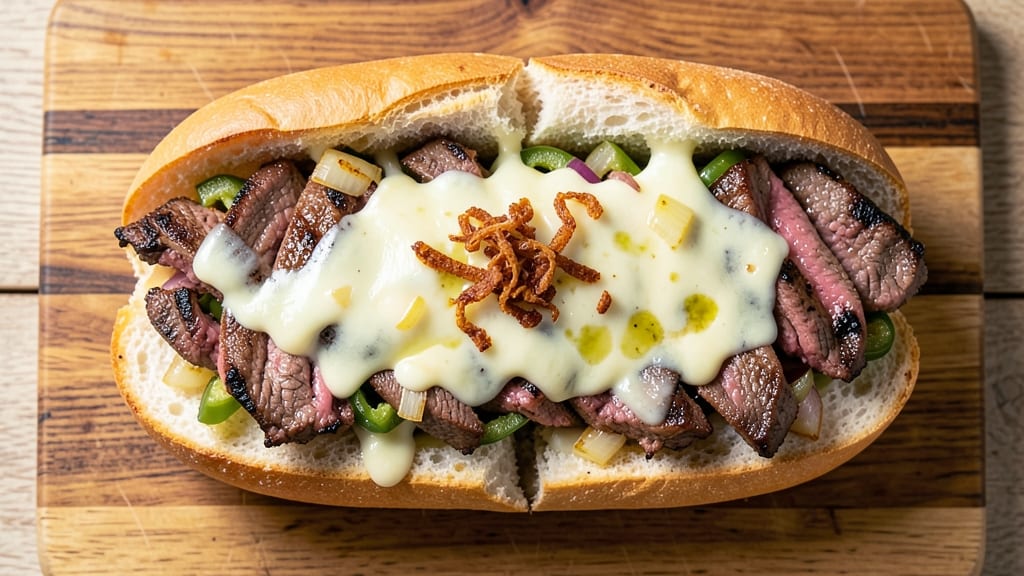
This original Philly cheese steak recipe delivers the iconic balance of tender beef, melted provolone, and toasted bread—just like Reading Terminal's legendary version, but with a professional twist.
The secret lies in thinly sliced ribeye cooked to perfect medium-rare, then layered with sharp provolone that melts into a gooey blanket over crispy hoagie rolls. I've refined this recipe over years of testing, ensuring every bite captures that authentic Philly flavor without requiring a line at the corner shop.
The process is straightforward but requires precision: thinly sliced beef (never pre-cooked) seared to medium-rare, then stacked with provolone that melts into a cohesive, stretchy layer.
Toasting the bread just enough to hold up to the filling while maintaining structure is critical—this isn't a sandwich that falls apart at the first bite. The result is a sandwich that's rich, savory, and perfectly balanced between the beef's charred edges and the cheese's creamy melt.
What makes this recipe stand out is the attention to traditional ingredients—ripened provolone (not pre-shredded) and high-quality ribeye—but with modern flexibility for customization. Add caramelized onions for sweetness or spicy mayo for heat, but keep the core elements intact.
This isn't just a sandwich; it's a taste of Philadelphia's culinary heritage, brought to your kitchen with professional results.
Perfect for game days, lunch specials, or when you crave that classic Philly flavor without leaving home. The method scales easily for parties, and leftovers reheat beautifully—just a quick toast in the oven to restore that crispy bread texture.
Let's get cooking with this time-tested recipe that's been satisfying Philly natives for decades.
Ingredients for original philly cheese steak
Thinly sliced ribeye, sharp provolone, and crispy hoagie rolls create this iconic Philly cheese steak.
| Ingredient | Amount | Notes |
|---|---|---|
| Ribeye Steak 🥩 | 1 lb | Thinly sliced against grain |
| Sharp Provolone Cheese 🧀 | 8 oz | Ripened, block form preferred |
| Hoagie Rolls 🍞 | 4 whole | Freshly baked, crusty texture |
| Yellow Onions 🧅 | 1 medium | Thinly sliced, caramelized optional |
| Green Bell Pepper 🥒 | 1 medium | Thinly sliced, seeds removed |
| Extra-Virgin Olive Oil 🫒 | 2 tbsp | High smoke point preferred |
| Diamond Crystal Kosher Salt 🧂 | 1 ½ tsp | For seasoning beef and bread |
| Freshly Ground Black Pepper 🌶️ | ½ tsp | Coarsely ground for beef |
| Garlic Cloves 🧄 | 2 cloves | Minced for optional spread |
| Mayonnaise 🥛 | 2 tbsp | For optional spicy mayo |
| Hot Sauce 🔥 | 1 tsp | For optional spicy mayo |
| Butter 🧈 | 1 tbsp | Unsalted, for toasting rolls |
| Worcestershire Sauce 🍯 | 1 tsp | For beef marinade optional |
The ribeye is non-negotiable for authentic flavor—look for well-marbled cuts at your butcher or specialty market like Whole Foods. Thinly slice it against the grain for maximum tenderness, and if you can't find ribeye, sirloin works in a pinch. For the provolone, block form is essential—pre-shredded lacks the melt and stretch. I always buy mine from Wegmans or Trader Joe's, where they keep it properly aged. The hoagie rolls should be fresh-baked; Otto's Bakery in Philly ships them frozen, but any crusty Italian roll works. Caramelizing the onions enhances sweetness, but thinly slicing raw onions adds fresh crunch that traditionalists prefer.
No sharp provolone? Muenster melts better but lacks that signature sharpness—use it only if you can't find provolone. Substituting bell peppers with mushrooms or jalapeños changes the texture but works in a bind. For the optional spicy mayo, Duke's or Hellmann's mayo with Frank's RedHot sauce delivers that classic kick. If you're making a batch, double the beef and cheese—this sandwich is always better when shared. The Worcestershire sauce in the marinade adds depth; Lea & Perrins is the gold standard, but any quality brand works.
Store the sliced beef and cheese separately in the fridge for up to 2 days—keep the beef airtight to prevent drying. The rolls toast best fresh but can be prepped ahead and reheated for 10 minutes at 350°F. Assemble sandwiches just before serving to maintain that crispy bread texture. Leftovers? Wrap tightly in foil and reheat in a skillet for that fresh-off-the-griddle feel. The cheese will stretch beautifully if heated gently—never microwave, as it makes the bread soggy.
Why You'll Love This Recipe
- No Chopping Needed: I swear by this—just slice the onions and peppers thin (a mandoline makes it stupid fast), toss them in a hot pan with a little oil, and they’re ready in 5 minutes. The steak? Slice it against the grain, hit it with a quick sear, and call it done.
- Melty Magic Combo: That sharp provolone oozes when it hits the hot steak—crispy edges, gooey center, and the ribeye’s beefy richness cutting through the salt. Honestly, the first time I tasted it, I immediately texted my dad: "You were right about the provolone."
- Tailgate to Tuesday: This feeds a crowd without stress—double the batch, wrap the extras in foil, and they reheat like a dream. I’ve served it at football games (where it disappears in minutes), as a late-night snack when the kids come home hungry, and even for a lazy Sunday brunch. Works every time.
- Leftovers That Don’t Suck: Most sandwiches get soggy, but not this one. Store the steak and cheese separately, toast the rolls fresh, and assemble when you’re ready. Between us, I’ve had these taste just as good at 3 PM the next day as they did at dinner—proof it’s my go-to for busy weeks.
Step-by-step instructions for authentic Philly cheese steak assembly
Here's the precise method to recreate a classic Philly cheese steak with perfectly sliced beef and melted provolone.
Prepare the Beef with Seasoning
Begin by slicing the 1 lb ribeye steak thinly against the grain using a sharp knife. I recommend cutting it into ¼-inch thick slices for even cooking and maximum tenderness. Place the sliced beef in a bowl and add the 1.5 tsp diamond crystal kosher salt and 0.5 tsp freshly ground black pepper, tossing to coat evenly. For extra depth, add the 1 tsp Worcestershire sauce and mix well. Let the beef marinate for 15-20 minutes at room temperature while you prepare the vegetables.
This brief marinating time ensures the beef absorbs the seasoning without becoming mushy. The Worcestershire sauce adds a subtle umami complexity that elevates the dish beyond basic salt and pepper. Don't skip this step—it makes a noticeable difference in flavor development.
Sauté the Vegetables Until Tender
Heat 2 tbsp extra-virgin olive oil in a large skillet over medium-high heat. Add the 1 medium yellow onion and 1 medium green bell pepper, both thinly sliced, and cook for 5-6 minutes until the onions become translucent and the peppers soften slightly. You'll know they're ready when they release their moisture but haven't yet browned.
I like to cook the vegetables until they're just tender—this prevents them from becoming mushy when combined with the beef later. The onions should be soft enough to pierce easily with a fork, while the peppers should still retain some bite. Remove the vegetables from the skillet and set them aside on a plate.
Cook the Beef Until Medium Rare
Return the skillet to medium-high heat and add the seasoned beef slices in a single layer. Cook for 2-3 minutes per side until the beef reaches medium-rare doneness (internal temperature of 130-135°F). The beef should be browned on the outside but still slightly pink in the center. Don't overcrowd the pan—cook in batches if necessary to maintain even heat.
This precise cooking time is crucial. Overcooking will make the beef tough, while undercooking leaves it raw. The high heat sears the exterior while keeping the interior tender. Once cooked, remove the beef from the skillet and set it aside with the vegetables.
Toast the Hoagie Rolls
While the beef cooks, prepare the 4 whole hoagie rolls by slicing each one horizontally in half. Spread the bottom halves with 1 tbsp butter and toast them in a clean skillet over medium heat for 1-2 minutes per side until golden brown and crisp. The butter should melt and create a rich, flavorful crust on the bread.
Toasting the rolls adds a satisfying crunch that contrasts beautifully with the tender beef and melted cheese. Keep the toasted rolls warm while you assemble the sandwiches. If you're using the optional garlic spread, mix the 2 tbsp mayonnaise, 1 tsp hot sauce, and 2 minced garlic cloves together and spread it on the toasted rolls before adding the beef.
Assemble and Melt the Cheese
To assemble each sandwich, layer ¼ of the cooked beef, ¼ of the sautéed vegetables, and 2 oz of the sharp provolone cheese onto the bottom half of each toasted roll. Top with the remaining roll halves and place the sandwiches on a baking sheet. Cover each sandwich tightly with aluminum foil and bake in a 375°F oven for 5-7 minutes until the cheese is fully melted and bubbly.
The foil ensures the cheese melts evenly without escaping, creating that classic Philly cheese steak experience. Once the cheese is melted and the sandwiches are heated through, remove them from the oven and let them rest for 2-3 minutes before serving. This resting period allows the cheese to set slightly, making it easier to handle and ensuring each bite is perfectly balanced with melted cheese, tender beef, and crisp vegetables.
Pro Tips For Making Original Philly Cheese Steak
- CRISP THE ONIONS FIRST: Slice the yellow onions thin—like paper—and cook them in a dry pan over medium-high heat until they’re golden and crispy before adding anything else. I used to soften them with the peppers, but that turns them mushy, and you lose that sweet, caramelized crunch that holds up under the cheese. Do this step while your steak rests.
- SALT THE STEAK LIKE THE SEA: Ribeye needs aggressive salting—at least 1 teaspoon of kosher salt per side, pressed in hard. I learned this the hard way: under-seasoned steak tastes bland even after grilling. Pat it dry first, then let it sit for 30 minutes uncovered in the fridge. (Yes, even if you’re impatient like me.)
- STOP WHEN IT’S 5 DEGREES LOW: Pull the ribeye at 130°F internal temp—it’ll climb to 135°F while resting. Overcooking turns it tough, and you’ll regret it when you’re shoving it into a hoagie. Rest it foil-wrapped for 5 minutes first, then slice against the grain. (No, don’t skip the foil—it traps the juices.)
- SHRED CHEESE HOT, NOT MELTED: Sharp provolone should be warm and stringy, not a soupy puddle. Grate it fresh (pre-shredded burns) and sprinkle it over the steak just before serving—the residual heat from the meat will melt it perfectly. If you melt it first, you’ll end up with a sad, gloppy mess. Trust me.
Common mistakes when making this dish
Overcooking the Beef
Medium-rare is non-negotiable for authentic Philly cheese steak—anything beyond that turns the beef tough and chewy. I've seen beginners crank the heat too high, resulting in beef that's barely recognizable.
Use a meat thermometer to check for 130-135°F internal temperature—this ensures tender, juicy slices that hold up to the cheese. If you're unsure, pull the beef just before it reaches medium and let it rest—it'll carry over to the perfect temp. 🌡️
Skipping the Room Temp Step
Letting the sliced beef sit at room temperature for 15-20 minutes before cooking is crucial—it prevents uneven cooking and ensures the seasoning penetrates. I've made this mistake and ended up with beef that cooked in patches.
Take it out of the fridge 30 minutes before you plan to cook it. If you're in a hurry, a quick soak in warm water for 5 minutes can help, but marinating properly is best.
Using Pre-Shredded Cheese
Pre-shredded provolone contains anti-caking agents that prevent proper melting, resulting in a dry, grainy texture instead of that classic stretchy blanket. I once used it out of convenience and ended up with a sandwich that tasted like it came from a fast-food joint.
Always buy block provolone and shred it yourself—it's worth the extra effort. If you're in a pinch, Muenster melts better than pre-shredded provolone but still won't match the sharp, authentic flavor. 🧀
Overloading the Sandwich
Piling too much beef and cheese onto a single roll creates a soggy, messy sandwich that falls apart. The classic Philly cheese steak is balanced—equal parts beef, veggies, and cheese. I recommend ¼ lb of beef per sandwich (about 4 oz) with 2 oz of cheese.
This keeps the structure intact while delivering that satisfying, hearty bite. If you're making a larger batch, scale the ingredients proportionally to avoid overstuffing.
Neglecting the Bread Toast
Skipping the butter toast on the hoagie rolls is a common oversight that leads to floppy, soggy sandwiches. The butter creates a flavorful crust that holds up to the filling, while the toast adds a satisfying crunch.
I like to toast the rolls just until golden—1-2 minutes per side over medium heat. If you're in a rush, a quick broil for 30 seconds works, but watch closely to avoid burning.
The bread should be crisp enough to stand up to the beef but still soft enough to bite into easily. 🍞
Assembling Too Early
Building the sandwich before the cheese melts leads to a messy, runny result. Always assemble the sandwiches after the beef is cooked and just before melting the cheese in the oven. I've seen people try to assemble ahead of time, only to end up with cheese oozing out everywhere.
The 5-7 minutes at 375°F with foil ensures the cheese melts evenly and binds everything together. Let the sandwiches rest for 2-3 minutes after baking—this helps the cheese set slightly so it doesn't slide out when you take a bite.
Nutrition facts
Frequently asked questions
What's the best cut of beef for an authentic Philly cheese steak?
Use ribeye for the classic flavor and marbling, but sirloin works in a pinch. The key is thinly slicing against the grain—¼-inch thick slices ensure tenderness. Never use pre-sliced deli beef; fresh, high-quality cuts make all the difference.
Can I make this sandwich ahead of time?
Yes, but assemble just before serving. Store cooked beef and cheese separately in the fridge for up to 2 days. Toast the rolls fresh and assemble with melted cheese—this keeps the bread crispy. For leftovers, wrap tightly in foil and reheat in a skillet for that fresh-off-the-griddle feel.
Why does my cheese not melt properly?
Pre-shredded cheese contains anti-caking agents that prevent melting. Always use block provolone and shred it yourself. For extra stretch, cover the assembled sandwich with foil and bake at 375°F for 5-7 minutes—this creates that iconic gooey blanket.
What's the secret to crispy hoagie rolls?
Toast the rolls in butter over medium heat for 1-2 minutes per side until golden. For extra crunch, broil for 30 seconds—just watch closely to avoid burning. The butter adds flavor while creating a sturdy base that holds up to the filling.
Can I grill this instead of pan-searing?
Slice the beef ¼-inch thick and grill over medium-high heat for 2-3 minutes per side for medium-rare. Use a meat thermometer to check 130-135°F. Assemble and melt the cheese in the oven as directed—grilling adds a smoky depth that pairs perfectly with the classic flavors.