
Desserts
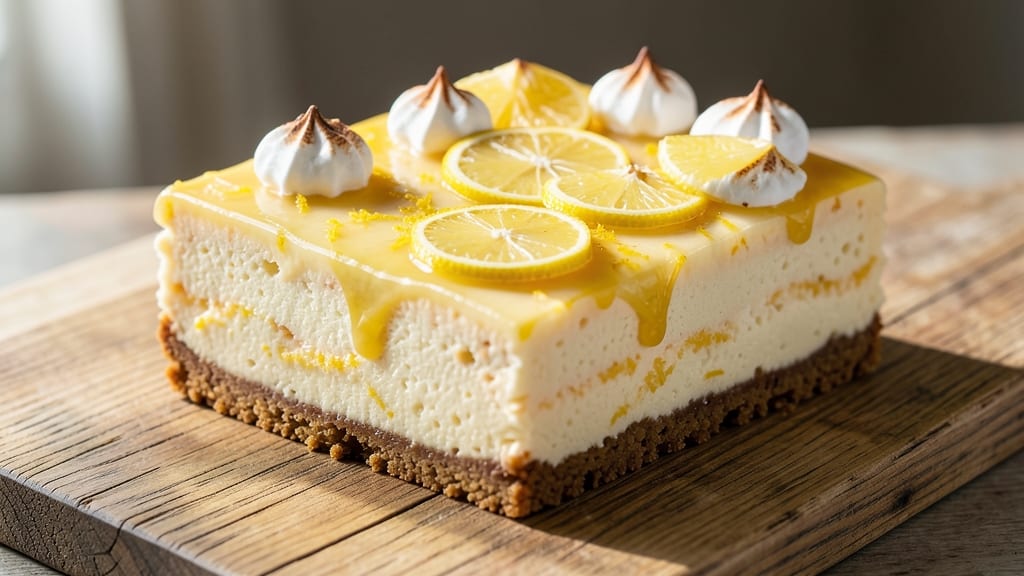
This Philadelphia cheese lemon cheesecake recipe takes the classic dessert and gives it a bright, tangy twist that’ll make your taste buds dance. 💛 The secret? A perfect balance of creamy Philadelphia cheese and zesty lemon—no one will guess it’s not from a bakery.
I’ve baked this version dozens of times, and it’s become my go-to for gatherings because it’s foolproof and always a crowd-pleaser.
The crust is buttery and crumbly, while the filling stays silky-smooth with just the right amount of lemon zest and juice to cut through the richness. Baking it in a water bath ensures a creamy texture without any cracks, and the lemon flavor shines through without overpowering.
It’s the kind of dessert that feels special but doesn’t require fancy skills—just patience and a few simple steps.
By the time you pull it from the oven, you’ll have a cheesecake with a golden crust, a velvety lemon-infused filling, and a tangy finish that makes every bite refreshing.
The aroma alone will have everyone gathering around, and the taste? Pure comfort with a zing. Ready to make one that’ll steal the show?
This recipe delivers restaurant-quality results with just a few key ingredients and a standard springform pan. Whether you’re serving it at a party or treating yourself to a slice, it’s the perfect blend of classic and unexpected. Let’s get baking!
Ingredients for philadelphia cheese lemon cheesecake
Eight simple ingredients transform into a showstopping lemon cheesecake with that perfect tangy-sweet balance.
| Ingredient | Amount | Notes |
|---|---|---|
| Philadelphia Cream Cheese 🧀 | 16 oz | Full-fat, room temperature |
| Granulated Sugar 🍚 | 1 ½ cups | White or light brown |
| Large Eggs 🥚 | 4 whole | Room temperature, separated |
| Lemon Zest 🍋 | 2 tbsp | Fresh, organic preferred |
| Lemon Juice 🍋 | ½ cup | Freshly squeezed |
| All-Purpose Flour 🌾 | ¼ cup | For crust stability |
| Unsalted Butter 🧈 | 1 ½ cups | Cold, cubed |
| Graham Cracker Crumbs 🍪 | 1 ½ cups | Honey or vanilla flavor |
| Granulated White Sugar 🍚 | ¼ cup | For crust sweetness |
| Vanilla Extract 🌸 | 1 tsp | Pure, high-quality |
| Salt 🧂 | ½ tsp | Fine sea salt |
| Heavy Whipping Cream 🥛 | ½ cup | For water bath |
The Philadelphia cream cheese is non-negotiable here—full-fat is a must for that luscious texture. Grab the 8 oz blocks from the store (they’re cheaper than tubs) and let them sit out for an hour before mixing. The lemon zest should be vibrant yellow—organic lemons from the farmers market have more flavor than grocery store ones. For the crust, Honey Maid graham crackers are my go-to, but any vanilla or honey-flavored crumbs work. If you can’t find them, crush regular graham crackers and add 1 tsp honey to the mix. The butter needs to be cold for a crisp crust—pull it from the fridge right before mixing.
No fresh lemons? Bottled lemon juice works in a pinch, but the zest is trickier—orange zest at half the amount adds a nice twist. Want extra richness? Add 2 oz mascarpone cheese to the filling. Short on cream cheese? Cottage cheese (full-fat) blends in surprisingly well, though the texture won’t be quite as smooth. The vanilla extract should be pure—Nielsen-Massey is my favorite, but any good brand works. If you’re baking in a humid kitchen, reduce the lemon juice by 1 tbsp to prevent cracks. And trust me, room temperature eggs whip up fluffier than cold ones—let them sit out for 30 minutes before separating.
This cheesecake keeps beautifully—covered at room temp for 2 days or fridge for 5 days. The crust stays crisp for hours, but the filling softens as it sits. Freeze for up to 3 months if you’re prepping ahead: thaw overnight in the fridge, then bring to room temp before serving. For parties, I always bake an extra 4-inch mini cheesecake—it’s perfect for sampling and disappears fast. The water bath is key: don’t skip it—it ensures that silky texture everyone loves.
Why You'll Love This Recipe
- No Mixing Madness: I swear by this recipe because it’s literally one bowl—no fancy piping, no water bath stress. Just cream cheese, sugar, eggs, and lemon, blended until smooth. My blender does all the work while I sip coffee.
- Zesty Magic: That lemon zest and juice? It’s the secret weapon. Bright, tangy, and just sweet enough—like a sunbeam in dessert form. The cream cheese keeps it rich, but the citrus cuts through the heaviness perfectly.
- Party-Proof Portion: This cheesecake is my go-to for gatherings because it’s always a hit. Serve it at brunch with berries, slice it for potlucks, or take it to a picnic—it travels well and never feels like a chore to bring.
- Budget-Friendly Luxury: I use store-brand sugar and whatever eggs are on sale, and it still tastes like a bakery treat. Plus, leftovers? They’re the best—cut into squares, wrap them up, and they stay fresh for days. (Yes, even my picky eaters ask for seconds.)
Step-by-step instructions for Philadelphia cheese lemon cheesecake
Here's how to create that perfect balance of creamy, tangy lemon and buttery graham crust.
👨🍳 Step 1: Prepare the Crust Mixture
In a medium bowl, combine the 1.5 cups graham cracker crumbs, 0.25 cup granulated white sugar, and 0.5 tsp salt. Mix well until evenly distributed. This is the foundation of our crust, so make sure every crumb gets coated with sugar for that perfect sweet-salty balance.
Next, cut in the 1.5 cups cold unsalted butter using a pastry cutter or two forks until the mixture resembles coarse crumbs with pea-sized butter pieces. The butter shouldn't melt completely—you want to maintain that texture for a sturdy crust. If you're using your hands, be gentle to avoid warming the butter.
🍳 Step 2: Assemble and Bake the Crust
Press the crumb mixture firmly and evenly into a 9-inch springform pan, creating an even layer at the bottom and about 1 inch up the sides. Use a glass to compact it thoroughly—this prevents crumbling later. Chill the crust in the freezer for 15 minutes while you prepare the filling.
Preheat your oven to 325°F. Line the bottom of the pan with parchment paper, then bake the crust for 10 minutes. This pre-bake creates a solid base that won't absorb filling moisture. Watch closely—it should be just starting to turn golden at the edges when ready.
🥘 Step 3: Mix the Lemon Filling
In a large mixing bowl, beat the 16 oz Philadelphia cream cheese until completely smooth. I use an electric mixer for this step—it ensures no lumps remain. Gradually add the 1.5 cups granulated sugar while mixing on medium speed until fully combined.
Add the 4 whole large eggs one at a time, mixing just until each is incorporated. Then stir in the 2 tbsp lemon zest, 0.5 cup lemon juice, 1 tsp vanilla extract, and 0.25 cup all-purpose flour. The batter should be thick but pourable. Here's the thing—don't overmix after adding the flour or you'll develop gluten and end up with a cakey texture instead of that classic cheesecake smoothness.
⏰ Step 4: Bake the Cheesecake
Pour the filling into the pre-baked crust, spreading it evenly. Place the springform pan inside a larger roasting pan and carefully pour the 0.5 cup heavy whipping cream into the bottom of the roasting pan. This creates a water bath that helps the cheesecake bake evenly without cracking.
Bake at 325°F for 50-55 minutes. The center should still jiggle slightly when gently shaken—it will continue setting as it cools. When you open the oven, you'll notice the edges are set but the center remains slightly soft. This is perfect—overbaking leads to cracks and dryness.
🍽️ Step 5: Cool and Set Properly
Remove the cheesecake from the oven and let it cool completely at room temperature for 1 hour. Then refrigerate uncovered for 4 hours or overnight. This gradual cooling prevents condensation from forming on top, which can cause cracks. The longer it chills, the firmer it becomes—ideal for clean slices.
Once fully set, run a knife around the edge to loosen it from the pan. Release the springform and let it rest for 10 minutes before serving. The texture should be silky smooth with a vibrant lemon flavor that brightens every bite. Serve chilled with fresh berries or a dollop of whipped cream for that classic presentation.
Pro Tips For Making Philadelphia Cheese Lemon Cheesecake
- Whip Cream Cheese Cold: Take your blocks of Philadelphia straight from the fridge—room temperature just makes it greasy. Beat them for 2-3 minutes first, then add sugar and eggs. I used to rush this, and the batter always ended up grainy. Trust me, the extra minute saves you from a sad, lumpy cheesecake.
- Strain Those Eggs: Separate eggs like you’re defusing a bomb—no shells sneaking in. But here’s the real move: strain the yolks through a fine-mesh sieve into your bowl. Catches any stray bits that’ll make your cheesecake look speckled. Yes, it’s extra work, but your lemony layers will thank you.
- Water Bath Non-Negotiable: No shortcuts here—wrap that springform in foil first, then submerge it in a hot water bath. I learned this after a cheesecake that wobbled like Jell-O. Keep the water just below the pan’s rim, and refill as it cools. No splashing, no cracks.
- Zest First, Juice Last: Grate that lemon zest fresh and add it to the batter early—it melds better than if you toss it in at the end. Save the juice for folding in last, right before baking. Too much zest upfront? Your cheesecake turns bitter. Balance matters.
Troubleshooting this recipe
Cracked Top Fix
If you see cracks forming on top during baking, don’t panic—this happens when the cheesecake sets too quickly. The fix? Poke 20-30 holes with a skewer or toothpick right after removing it from the oven.
This helps the filling release steam and prevents further cracking. For extra insurance, reduce the oven temperature by 25°F next time and bake for 5-10 minutes longer to slow the setting process. 💡
Soggy Crust
A soggy crust usually means the filling was too wet or the crust wasn’t pre-baked long enough. To prevent this, always pre-bake the crust for 10-12 minutes until it’s just golden.
If your crust still feels damp, chill the assembled cheesecake for 30 minutes before baking to help the filling set faster. For extra stability, add 2 tbsp all-purpose flour to the crust mixture—it absorbs moisture beautifully. ❄️
Dense or Grainy Texture
Overmixing the filling or using cold eggs can turn your cheesecake dense or grainy. Room-temperature eggs are key—let them sit out for 30 minutes before separating. Also, mix the filling on low speed after adding the flour to avoid developing gluten.
If you accidentally overmix, fold in an extra 2 tbsp of heavy cream to lighten the texture. And always use full-fat Philadelphia cream cheese—low-fat versions lack the richness needed for a silky finish. 🧀
Cheesecake Stuck to Pan
If your cheesecake refuses to release from the springform pan, it’s likely because the crust wasn’t pressed firmly enough or the pan wasn’t properly greased. Line the pan with parchment paper before pressing the crust, and spray the sides with baking spray for easy release.
After baking, run a thin knife around the edge to loosen it, then chill for 10 minutes before attempting to remove. If it still sticks, gently tap the pan on all sides to break the seal. 🔥
Lemon Flavor Too Weak
If your lemon flavor seems muted, it’s probably because the zest wasn’t fresh or the juice was bottled. Use only fresh lemon zest—the more vibrant the yellow, the stronger the flavor.
For extra zing, add 1 tbsp more lemon juice to the filling or zest an additional lemon for the crust mixture. Pairing with raspberry compote on top also enhances the citrus notes. 🍋
Cheesecake Too Sweet
If your cheesecake tastes overly sweet, the sugar-to-cream cheese ratio might be off. Reduce the sugar by 2 tbsp next time and increase the lemon juice by 1 tbsp to balance the sweetness.
For a more sophisticated flavor, replace 2 tbsp of sugar with honey—it adds depth without cloying sweetness. Taste the filling before baking; it should be slightly sweet but still tangy. 💛
Nutrition facts
Frequently asked questions
Can I make this lemon cheesecake without a water bath?
The water bath is key for preventing cracks and ensuring a silky texture. Without it, your cheesecake may develop a dense center or surface cracks. If you must skip it, bake at 300°F instead of 325°F for 60-65 minutes and tent the pan with foil after 30 minutes to slow baking. Still expect slightly more risk of cracks.
How do I store leftovers to keep them fresh?
Store in an airtight container in the fridge for up to 5 days. The crust stays crisp for 2 days at room temperature, but the filling softens. For longer storage, freeze for up to 3 months—thaw overnight in the fridge before serving. The lemon flavor actually intensifies slightly after a day or two!
Can I substitute cream cheese brands?
Philadelphia is ideal for its consistency, but other full-fat brands like Kraft or Wisconsin Buttercream work in a pinch. Avoid low-fat versions—they lack richness and may make the texture grainy. For a lighter option, blend 12 oz cream cheese + 4 oz mascarpone for extra creaminess. Always use room-temperature cheese!
What's the best way to serve this cheesecake?
Slice and serve chilled with fresh berries, a dollop of whipped cream, or a drizzle of raspberry compote. For a fancy touch, garnish with extra lemon zest or mint leaves. It's perfect for brunch, dessert parties, or as a showstopper for holidays. The lemon flavor pairs beautifully with blueberries or strawberries too!
Why did my cheesecake develop a yellow tint?
The yellow color comes from the lemon zest and natural caramelization during baking—it's normal! If it's too intense, reduce zest to 1 tbsp next time. Overbaking can also cause browning. For a whiter look, bake at 300°F instead of 325°F and cover loosely with foil after 40 minutes. The flavor won't be affected!