
Appetizers
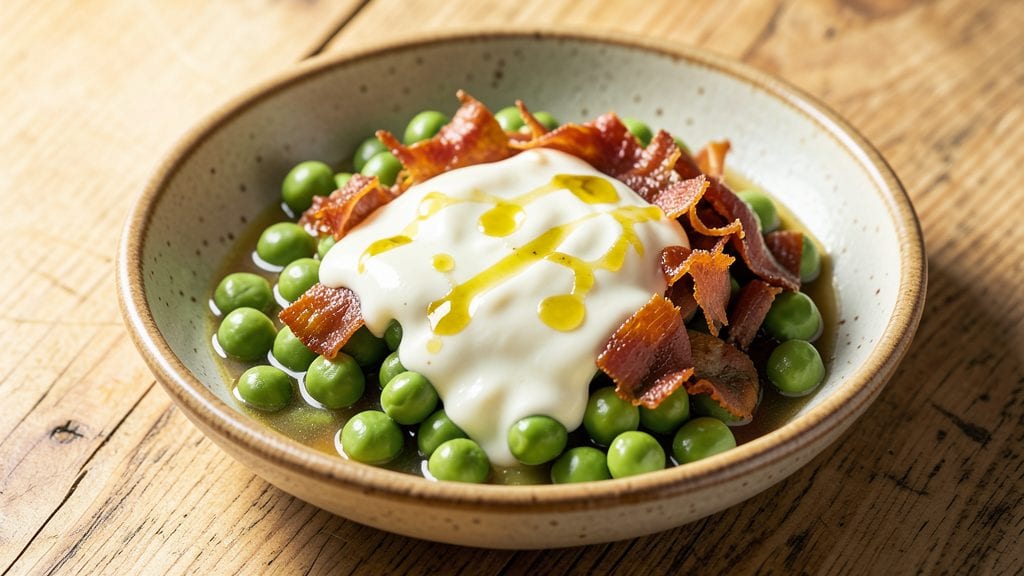
This cheese and peas recipe transforms humble garden peas into a luxurious appetizer that balances crispy pancetta bites with creamy pea pudding—elevating a simple vegetable into something restaurant-worthy. The secret lies in perfectly textured peas: tender yet holding their shape, topped with golden, salty pancetta that adds a satisfying crunch.
I developed this dish after realizing how often peas were overlooked in favor of more glamorous vegetables, and it’s become a crowd-pleaser at every gathering.
The foundation of this recipe is a velvety pea purée, enriched with sharp cheddar and a touch of cream for that creamy consistency you’d expect from a gourmet dish. While it simmers, the pancetta renders until crispy, creating a contrast that makes every bite exciting.
What sets this apart is the technique of folding the pancetta into the pea mixture at the end—ensuring each spoonful delivers that perfect mix of textures and flavors.
By the time you serve this dish, you’ll have a creamy pea pudding with pockets of melted cheese and crispy pancetta bits peeking through. The aroma alone will draw people to the table, and the first bite delivers that perfect harmony of smooth, rich peas and salty, crunchy pancetta.
It’s the kind of appetizer that makes guests ask for the recipe before dessert.
This dish works equally well as a standalone appetizer or a light main course for special occasions. Serve it warm with a sprinkle of fresh parsley or a drizzle of truffle oil for an extra touch of sophistication.
The recipe scales easily, making it ideal for parties or meal prep—just reheat gently to maintain that crispy texture.
Ingredients for cheese peas
Fresh peas, sharp cheddar, and crispy pancetta transform a simple dish into restaurant-worthy elegance.
| Ingredient | Amount | Notes |
|---|---|---|
| Fresh Garden Peas 🌽 | 1 ½ cups | Frozen works if fresh unavailable |
| Vegetable Stock 💧 | 1 cup | Low-sodium preferred for balance |
| Sharp White Cheddar Cheese 🧀 | ¾ cup | Freshly grated from block |
| Heavy Cream 🥛 | ½ cup | Full-fat for creamy texture |
| Extra-Virgin Olive Oil 🫒 | 2 tbsp | For crispy pancetta rendering |
| Vegetarian Pancetta 🍖 | 4 oz | Diced small for crispy bits |
| Garlic Cloves 🧄 | 2 cloves | Minced for aromatic base |
| Fresh Parsley 🌿 | ¼ cup | Chopped for garnish |
| Salt 🧂 | ½ tsp | Kosher or sea salt |
| Black Pepper 🌶️ | ¼ tsp | Freshly ground for heat |
| Truffle Oil 🫒 | 1 tsp | Optional for sophistication |
| Lemon Zest 🍋 | 1 tsp | Brightens flavor profile |
The peas are the heart of this dish—fresh garden peas from a farmers market have the best texture, but frozen peas work perfectly if you're short on time. I always grab the organic variety when possible, as they tend to hold their shape better during cooking. The sharp white cheddar is non-negotiable here—it needs to be aged at least 6 months for that perfect balance of tang and creaminess. Whole Foods or Trader Joe's carry excellent options, but any block cheese will do if you grate it yourself. The vegetarian pancetta is key for that crispy texture; look for it in the meat section or specialty stores like Whole Foods—it's usually made from mushrooms or seitan.
No fresh parsley? Dried parsley at one-third the amount works in a pinch, but fresh is ideal for that bright pop of color. Short on sharp cheddar? Parmigiano-Reggiano or Gruyère both add wonderful depth. The truffle oil is optional but recommended for that luxurious touch—Trader Joe's carries a great affordable version. For the pancetta, don't skip the diced size—small pieces get crispy while larger ones stay chewy. The vegetable stock should be low-sodium to let the cheese and pancetta shine; Pacific Foods or Imagine brands are excellent choices. And if you're feeling adventurous, try adding a pinch of nutmeg to the pea mixture for a sophisticated twist.
This dish reheats beautifully—just warm gently in a saucepan with a splash of cream to restore that creamy texture. Keeps for 3-4 days in the fridge, though the pancetta loses some crispiness after day two. For make-ahead parties, assemble the dish without the pancetta, refrigerate, then crisp the pancetta fresh before serving. The lemon zest can be added just before serving to keep its bright flavor. Portion into small ramekins for elegant appetizer servings, or serve family-style in a large bowl for casual gatherings.
Why You'll Love This Recipe
- No-Fuss Freshness: I swear by using garden peas straight from the pod—no frozen, no canned. That bright, crisp snap and sweetness? Unmatched. Just shell them while watching TV, then toss them in. Minimal effort, maximum payoff.
- Creamy Cheese Magic: Sharp white cheddar and heavy cream transform these peas into something rich yet light. The cheese melts into little pockets of gooey goodness, while the olive oil adds a bright finish. It’s like a hug in a bowl—simple, but ridiculously satisfying.
- Weeknight Workhorse: This dish is my go-to when I need something quick but impressive. Serve it alongside grilled chicken or roasted veggies for a full meal, or pile it over toast for a lazy Sunday brunch. Honestly, it works at any time of day.
- Budget-Friendly Luxury: Fresh peas and cheddar might seem fancy, but they stretch further than you’d think. A single batch feeds four, and leftovers reheat beautifully—no soggy texture, just that same creamy perfection. My wallet and my taste buds thank me.
Step-by-step instructions for cheese and peas with crispy pancetta
This method delivers perfectly crispy pancetta alongside a velvety pea purée—simple steps for restaurant-quality results.
Render the Pancetta Until Crispy
Heat a large skillet over medium heat and add the 2 tablespoons of extra-virgin olive oil. Once shimmering, add the 4 ounces of diced vegetarian pancetta and cook for 8-10 minutes, stirring occasionally. You're looking for golden, crispy bits that release easily from the pan. If the pancetta releases too much fat, carefully pour off all but 1 tablespoon to maintain flavor without excess oil.
During the last 2 minutes of cooking, add the 2 minced garlic cloves and stir until fragrant—about 30 seconds. Remove from heat and transfer the crispy pancetta mixture to a paper towel-lined plate, leaving the rendered fat in the skillet. This crispy pancetta will form the perfect textural contrast to the creamy peas.
Simmer Peas in Vegetable Stock
Return the skillet to medium heat and add the 1.5 cups of fresh garden peas along with the 1 cup of vegetable stock. Bring to a gentle simmer and cook uncovered for 5-6 minutes, stirring occasionally. The peas should soften but still retain some bite—you want them tender enough to purée smoothly but not mushy.
Taste the peas and adjust seasoning with the 0.5 teaspoon of salt and 0.25 teaspoon of black pepper. The stock should be flavorful but not overly salty. If using frozen peas, reduce cooking time to 4-5 minutes as they'll soften faster.
Create the Creamy Pea Purée
Using an immersion blender, purée the peas directly in the skillet until completely smooth. If you prefer to use a regular blender, carefully transfer the hot mixture to the blender and blend until silky. Return the purée to the skillet and stir in the 0.5 cup of heavy cream and the 0.75 cup of freshly grated sharp white cheddar cheese.
Cook over low heat for 3-4 minutes, stirring constantly, until the cheese melts completely and the mixture thickens to a pudding-like consistency. The purée should coat the back of a spoon and hold its shape when dropped from a spoon. If it's too thick, add 1-2 tablespoons of the reserved pancetta fat to loosen it.
Finish with Truffle and Lemon
Remove the skillet from heat and stir in the 1 teaspoon of truffle oil and 1 teaspoon of lemon zest. The truffle oil adds earthy depth while the lemon zest brightens the rich cheese flavor. Taste and adjust seasoning if needed—this is your final chance to balance the dish.
Return the skillet to low heat and gently fold in the crispy pancetta (with any accumulated juices) to warm through. The pancetta should be heated just enough to release its aroma without losing its crispness. Divide the creamy pea purée among serving dishes and top with the crispy pancetta bits.
Garnish and Serve Immediately
Sprinkle each serving with the 0.25 cup of chopped fresh parsley for freshness and color. The parsley not only looks beautiful but also adds a bright, herbal note that cuts through the richness of the cheese and cream. Serve immediately while the pancetta remains crispy and the pea purée is warm and creamy.
This dish works beautifully as a side for grilled meats or fish, or as a light vegetarian main course. The contrast between the crispy pancetta and velvety peas creates a perfect balance of textures and flavors in every bite.
Pro Tips For Making Cheese Peas
- Blanch Peas First: Dump raw peas straight into simmering stock, and you’ll end up with a mushy, sad purée. Instead, blanch them for 90 seconds in boiling salted water first—this keeps them bright green and intact. Drain, shock in ice water, then add them back to the pot. (Yes, it’s an extra step, but the texture makes all the difference.)
- Grate Cheese Fine: Sharp white cheddar loses its edge when it clumps. Use the smallest holes on your box grater—even better, pulse it in a food processor for a powdery consistency that melts smoothly. Skip the pre-shredded stuff; it’s coated with anti-caking agents that turn your sauce grainy.
- Simmer, Don’t Boil: After adding the cream and cheese, keep the heat at a gentle simmer. Letting it boil will scorch the cream and make the cheese separate like a greasy blanket. You want bubbles that barely break the surface—this keeps everything creamy and cohesive.
- Finish with Olive Oil: Stir in a tablespoon of extra-virgin olive oil at the very end. It cuts through the richness of the cheese and cream, adding brightness and preventing the sauce from feeling heavy. (Trust me, your taste buds will notice the difference.)
Common mistakes when making great cheese peas
Overcooking Peas
Peas are delicate and turn mushy when overcooked, ruining the creamy texture of your dish. I’ve learned the hard way—cook them for only 5-6 minutes (or 4-5 minutes if frozen) until tender but still holding shape. Overcooked peas will purée into a gluey mess instead of a velvety base. 🌱
Skipping the Purée Step
Some recipes suggest leaving peas whole, but for this dish, a smooth purée is essential for that restaurant-worthy texture. If you rush this step, you’ll miss the luxurious mouthfeel.
Use an immersion blender for ease—it keeps everything in one pot and prevents splatters. Never skip blending, or your dish will taste uneven and chunky.
Using Low-Quality Cheese
The cheese is the soul of this recipe, so don’t cut corners with pre-shredded cheese—it contains anti-caking agents that make the sauce grainy. Freshly grate sharp white cheddar (or Parmigiano-Reggiano) for a smooth, creamy result.
Pre-shredded cheese will clump and ruin the silky texture you’re working so hard to achieve.
Overheating the Cream
Heavy cream burns easily, and once it curdles, there’s no fixing it. Keep the heat at low when adding the cream and cheese, and stir constantly.
If the mixture starts to separate or develop a cooked egg smell, remove it from heat immediately. A gentle simmer is key—never let it boil.
Adding Pancetta Too Early
If you fold in the crispy pancetta while the pea purée is still hot, it’ll lose its crunch and turn soggy. Wait until the very end to gently warm it through—just enough to release its aroma without sacrificing texture.
The pancetta should stay crispy, not chewy. This is where the magic happens in every bite! 🍽️
Ignoring the Fat Reserve
That rendered pancetta fat in the skillet isn’t waste—it’s flavor gold! If your purée turns out too thick, add 1-2 tablespoons of the reserved fat to loosen it without thinning the dish. Skipping this step means missing out on layers of richness that tie everything together.
Nutrition facts
Frequently asked questions
Can I make this cheese and pea dish vegetarian?
The recipe already is vegetarian! The key substitution is using vegetarian pancetta (made from mushrooms or seitan) instead of traditional pork pancetta. This keeps the crispy texture while making it suitable for veggie diets. Just ensure your cheese is vegetarian-friendly too.
How do I adjust this recipe for a vegan version?
Replace the heavy cream with coconut cream or cashew cream, and use vegan cheese (like Violife or Miyoko's) or nutritional yeast for cheesiness. For the pancetta, stick with store-bought vegan pancetta. The purée will still be creamy, though the flavor will be slightly different.
Can I use canned peas instead of fresh or frozen?
Yes, but drain and rinse them well first to remove excess sodium. Canned peas are softer, so reduce cooking time to 3-4 minutes to avoid mushiness. They work best in this creamy dish, though fresh or frozen peas give better texture control.
What's the best way to reheat leftovers?
Gently warm in a saucepan with a splash of cream or stock over low heat to restore creaminess. Microwaving can make the pancetta soggy. For best results, reheat just until warm (about 2-3 minutes), then garnish with fresh parsley and a drizzle of truffle oil.
Can I make this ahead for a party?
Prepare the creamy pea purée up to 2 days ahead and refrigerate. On serving day, crisp the pancetta fresh and fold it in just before serving. This preserves the texture contrast. For parties, portion into small ramekins for easy serving.