Main Courses
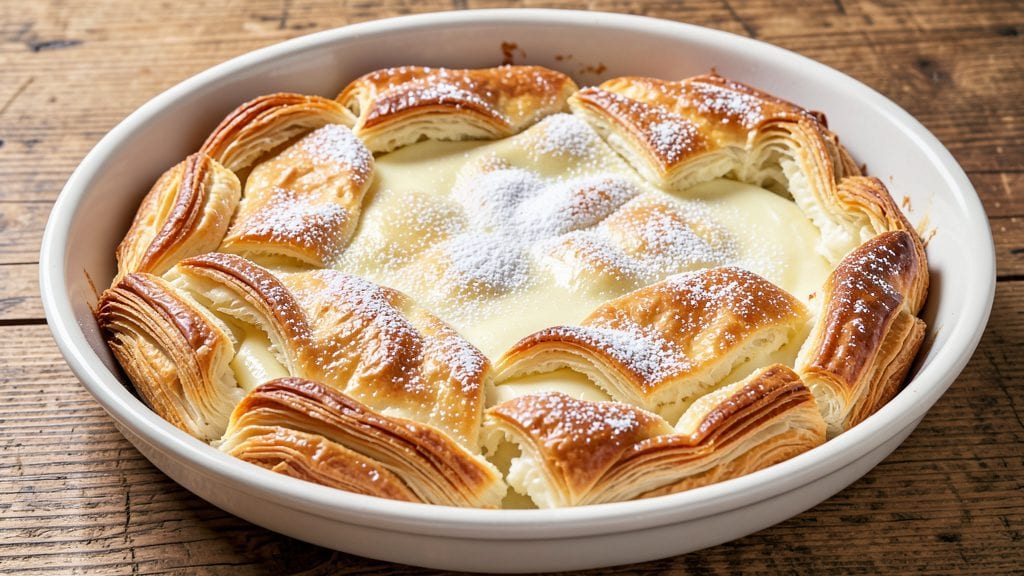
This Philadelphia cream cheese pastry recipe delivers flaky, golden layers wrapped around a velvety filling that balances tangy cream cheese with just the right amount of sweetness.
The secret lies in chilling the dough thoroughly and using cold butter for that signature crispness—techniques I perfected after years of experimenting with pie crusts in Mrs. Henderson’s kitchen. That first bite should crackle with buttery perfection while melting into creamy richness inside.
The dough comes together with simple ingredients but requires patience—30 minutes of resting time ensures tender layers rather than tough ones. I use a food processor for the dough to avoid overworking the butter, which keeps those layers distinct and crisp.
The filling gets its structure from whipped cream cheese and powdered sugar, creating a smooth, pipeable texture that stays firm enough to hold its shape.
Baking at 375°F for 25 minutes yields a pastry with edges that stay crisp while the center remains tender. The aroma alone—warm butter, vanilla, and just a hint of tang—will have everyone gathered around your table.
This recipe works for individual hand pies or a full sheet pan, making it perfect for holidays or weeknight treats.
Once cooled, the pastry holds its shape beautifully, ready for dusting with powdered sugar or a drizzle of caramel. The filling stays creamy without weeping, and the crust maintains its flakiness even after slicing.
Serve warm for maximum enjoyment, or let it cool slightly for cleaner cuts. This is the kind of dessert that makes baking feel like a true accomplishment.
Ingredients for philadelphia cream cheese pastry
Simple ingredients, expert techniques—this pastry delivers buttery layers and creamy filling perfection.
| Ingredient | Amount | Notes |
|---|---|---|
| All-Purpose Flour 🌾 | 2 ½ cups | Sifted for light texture |
| Unsalted Butter 🧈 | 1 cup | Cold, cubed, 1/2 cup + 2 tbsp |
| Granulated Sugar 🍚 | ¼ cup | For dough structure |
| Salt 🧂 | ½ tsp | Fine sea salt preferred |
| Ice Water 💧 | ½ cup | Chilled for dough binding |
| Philadelphia Cream Cheese 🧀 | 8 oz | Room temperature, full-fat |
| Powdered Sugar 🍚 | ½ cup | Sifted for smooth filling |
| Vanilla Extract 🌿 | 1 tsp | Pure vanilla preferred |
| Heavy Whipping Cream 🥛 | ¼ cup | Cold, for filling stability |
| Egg Yolk 🥚 | 1 whole | For dough cohesion |
| Powdered Sugar 🍚 | 2 tbsp | For final dusting |
The butter is non-negotiable here—European-style unsalted butter from Plugrá or Land O'Lakes gives the best flavor and texture. Keep it cold until the last step, and cube it uniformly for even distribution. The flour should be all-purpose, not self-rising, and stored in the freezer to prevent rancidity. For the cream cheese, Philadelphia brand is essential—it has the right fat content and tang. If your kitchen isn't warm, let the block sit at room temperature for 30 minutes before whipping. The egg yolk acts as a binder, so use a fresh one for maximum cohesion in the dough.
No cold butter? Whipped cream cheese can replace some of the filling's butter content, but the dough will be less flaky. Substitute powdered sugar with granulated sugar plus 1 tbsp cornstarch for the filling, though the texture won't be as light. For the dough, whole wheat flour at half the amount works but may yield a denser crust. The vanilla extract can be swapped for 1/2 tsp vanilla bean paste if you prefer a more intense flavor. If you're short on heavy cream, Greek yogurt thinned with milk mimics the tang but won't whip as firmly.
Store the dough between parchment paper in the fridge for up to 2 days—it needs to rest before rolling. The filling keeps for 3 days in an airtight container, but the pastry reheats best when baked fresh. For make-ahead convenience, assemble the pastries and freeze them unbaked on a tray lined with parchment. Once frozen, transfer to a sealed bag for up to 3 months. Bake straight from frozen, adding 5-7 minutes to the cooking time. The powdered sugar dusting should always be done fresh—it adds that final touch of sweetness and prevents the crust from becoming soggy.
Why You'll Love This Recipe
- No-Fuss Dough: I swear by this recipe because it’s all about the butter—cold cubes cut into flour with your fingers, then ice water just until it holds. No food processor, no stress, and no waiting for dough to rest. Honestly, my hands get tired before the dough does.
- Buttery Crunch Magic: That first bite? Flaky layers with a hint of sweetness from the sugar—it’s like a hug for your taste buds. The cream cheese twist (even if you’re not adding filling yet) gives it this rich, almost custardy depth that’s weirdly addictive.
- Weeknight & Holiday: Freeze half the dough for later—it thaws in 30 minutes and bakes like fresh. Use it for breakfast pastries, pot pie crusts, or even a fancy cheesecake shell. Between us, I’ve used it for everything from sloppy joe wraps to a last-minute Thanksgiving appetizer.
- Pantry Staple Power: Five ingredients, all things I already have. No specialty flours, no weird ratios—just flour, butter, sugar, salt, and ice water. My grocery bill stays low, my freezer stays stocked, and I’m always ready for whatever craving hits. (Yes, even on a Tuesday night.)
Step-by-step instructions for Philadelphia cream cheese pastry
A perfect balance of flaky layers and rich cream cheese filling awaits—follow these precise steps.
Create the Cold Butter Dough
In a large mixing bowl, combine the 2.5 cups all-purpose flour and 0.25 cup granulated sugar. Whisk in the 0.5 teaspoon salt until evenly distributed. Cut in the 1 cup unsalted butter (cold and cubed) using a pastry cutter or your fingers, working quickly to keep everything chilled. The mixture should resemble coarse crumbs with pea-sized butter pieces—this creates those signature flaky layers.
Add the 1 whole egg yolk and mix gently with a fork until the dough begins to come together. Gradually pour in the 0.5 cup ice water, 1 tablespoon at a time, mixing just until the dough forms a shaggy mass. Avoid overworking—this develops gluten and ruins the flakiness. Shape the dough into a disk, wrap in plastic, and refrigerate for at least 1 hour (up to 24 hours). Cold dough prevents shrinking during rolling.
Prepare the Cream Cheese Filling
In a medium bowl, beat the 8 oz Philadelphia cream cheese until completely smooth. Add the 0.5 cup powdered sugar, 1 teaspoon vanilla extract, and 0.25 cup cold heavy whipping cream, mixing until fully incorporated. The filling should be thick but pipeable—if it's too soft, chill for 15 minutes before proceeding. This rich mixture is what makes this pastry irresistible.
For best results, work quickly after removing the dough from the refrigerator. The cold butter must stay firm to maintain those delicate layers. Preheat your oven to 375°F while you prepare the filling—this ensures your pastry goes in hot and bakes evenly.
Roll and Assemble the Pastry
On a lightly floured surface, roll out the chilled dough to a 12x10-inch rectangle, about 1/8-inch thick. Transfer to a parchment-lined baking sheet. Using a piping bag or spoon, spread the cream cheese filling evenly over the dough, leaving a 1-inch border around the edges. The filling should cover the center completely but not touch the edges.
Fold the edges of the dough inward, overlapping slightly in the center to completely enclose the filling. Press gently to seal, then use a fork to crimp the edges decoratively. Brush the top with a little water and sprinkle with 2 tablespoons powdered sugar for a sweet finish. Cut 4 slits in the top to allow steam to escape—this prevents puffing and ensures even baking.
Bake to Golden Perfection
Bake the pastry in the preheated 375°F oven for 35-40 minutes, until the edges are deep golden brown and the center is just set. The filling should be warm but not runny. Rotate the pan halfway through baking for even browning. If the top browns too quickly, loosely cover with foil.
Remove from the oven and let cool for 10 minutes before slicing. The layers should be crisp and flaky, with a warm, creamy filling that melts slightly with each bite. Serve warm with a dusting of additional powdered sugar and a cup of tea for the perfect treat.
Pro Tips For Making Philadelphia Cream Cheese Pastry
- Cut Butter in Cold: Use your stand mixer’s paddle attachment (not dough hook) to pulse the cold butter and flour until it resembles coarse crumbs—no need to overwork it. I learned this the hard way after trying to mix it by hand and ending up with a greasy mess that wouldn’t hold shape.
- Ice Water Only: Grab a bowl of ice water, not tap water, and add it one tablespoon at a time—this keeps the dough from getting gummy or sticky. I used to dump it all in at once, and the pastry would either fall apart or turn out dense.
- Rest Before Rolling: Wrap the dough in plastic and let it rest in the fridge for at least 30 minutes before rolling it out—this relaxes the gluten and prevents cracking. I skipped this once and ended up with a pastry that looked like it had been dragged through a hedge.
- Room-Temp Cream Cheese: Take the cream cheese out of the fridge 30 minutes before mixing so it’s soft but not melted—this ensures it blends smoothly with the butter and flour. Cold cream cheese makes the dough lumpy, and no one wants a pastry with pockets of resistance.
Make-ahead tips for leftovers
Dough Prep Ahead
The dough is the foundation, so I always make it first—it needs at least 1 hour to chill properly. Wrap it tightly in plastic wrap and refrigerate for up to 2 days, or freeze for 1 month by wrapping in foil.
When ready to use, let it sit at room temperature for 10-15 minutes before rolling. This prevents cracking and makes handling easier. I like to label my dough with the date to avoid confusion. ❄️
Filling Prep Strategy
Assemble the filling the night before and store it in an airtight container in the fridge. The cold temperature helps it hold its shape better when piping. If you're making individual pastries, pipe the filling into a piping bag and refrigerate it overnight—this makes assembly faster the next day.
Just give it a quick stir before using to redistribute any separated cream cheese. 🥛
Freezer-Friendly Assembly
For a true make-ahead masterpiece, assemble the pastries completely (unbaked) and freeze them on a parchment-lined tray. Once frozen solid, transfer them to a sealed freezer bag for up to 3 months. Bake straight from frozen, adding 5-7 extra minutes to the cooking time.
The cold start ensures even baking without soggy bottoms. This is my go-to for holiday gatherings—just pull them out and bake while guests arrive. ⏰
Baking Schedule
If you're hosting, bake the pastry 30 minutes before serving—this gives it time to set while staying warm. For make-ahead baking, let it cool completely, then wrap tightly in plastic wrap. Reheat individual slices in a 350°F oven for 5-7 minutes to restore that golden crispness.
I often bake two pastries at once and freeze one for later—this way, you always have a fresh one ready. 🔥
Storage Hacks
Store leftover slices in an airtight container at room temperature for 2 days or refrigerate for 4 days. To revive stale pastries, brush the top with a little milk or cream and bake at 350°F for 5 minutes—this restores the flakiness.
For long-term storage, freeze slices individually wrapped in parchment, then reheat as needed. The filling stays creamy when properly stored, so no soggy surprises here. 💡
Portland Market Shortcut
At New Seasons Market, I grab pre-made pie crusts for busy days—just use a 9-inch crust and double the filling. Roll it out, fill, fold, and bake as directed. For a rustic touch, use a 10-inch cast iron skillet instead of a baking sheet—it gives beautiful edges.
This shortcut saves 30 minutes of prep time without sacrificing quality. Perfect for when Lily's soccer practice runs late! 🏀
Nutrition facts
Frequently asked questions
Why does my cream cheese filling turn runny when baking?
The filling may melt too much if the cream cheese isn't properly chilled before using or if the oven temperature exceeds 375°F. Always use cold ingredients and consider adding 1 tablespoon cornstarch to the filling for better stability. Also, avoid opening the oven door during baking to prevent temperature fluctuations.
Can I make this pastry without a food processor?
Cut the cold butter into the flour mixture using a pastry cutter or two forks. Work quickly to keep everything chilled, and mix just until the dough comes together. The texture will be slightly less uniform, but you'll still achieve flaky layers. For best results, use your fingers to break up butter clumps into pea-sized pieces.
What's the best way to make individual cream cheese hand pies?
Roll out the chilled dough to 1/8-inch thickness and cut into 3-inch circles using a round cutter. Place a 1-teaspoon dollop of filling in the center of each circle, fold over to seal, and crimp the edges with a fork. Brush with egg wash and bake at 375°F for 18-20 minutes until golden. The smaller size bakes faster than the sheet pan version.
How do I prevent the crust from getting soggy?
Always bake the pastry until the crust is fully set (edges should be deep golden brown). For extra insurance, chill the assembled pastry for 20 minutes before baking. If reheating leftovers, place slices on a baking sheet at 350°F for 5 minutes to restore crispness. Avoid storing with the filling exposed to air.
Can I substitute cream cheese with something else?
For a lighter option, use 4 oz cream cheese + 4 oz ricotta cheese mixed with 1/4 cup powdered sugar. For extra richness, add 1/4 cup melted butter to the filling. However, Philadelphia cream cheese provides the perfect balance of tang and creaminess that's hard to replicate. The fat content is crucial for that signature texture.