
Appetizers
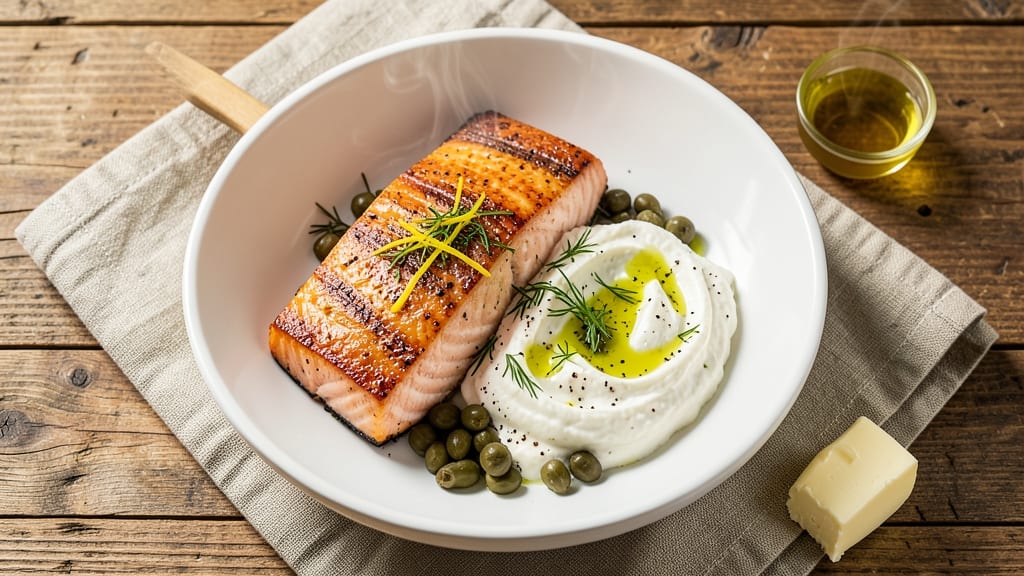
This salmon and cottage cheese recipe delivers a surprising yet harmonious combination of crispy pan-seared salmon with a velvety cottage cheese center that adds a tangy, creamy contrast. The technique ensures the salmon stays moist while achieving that coveted golden crust, all balanced by the subtle acidity of the cheese.
I developed this dish after realizing how well the two ingredients complement each other—salmon’s richness pairs beautifully with cottage cheese’s mild, slightly tangy profile.
The key to success lies in preparing the salmon just right—seasoned simply with salt, pepper, and a touch of lemon to enhance its natural flavor, then seared in a hot pan until perfectly crispy on the outside.
Meanwhile, the cottage cheese acts as a filling or sauce, adding a luxurious texture that elevates the dish without overpowering the salmon’s delicate taste. This method transforms what could be an ordinary appetizer into something truly special.
What you’ll end up with is a dish that’s both elegant and approachable, perfect for a light lunch or a sophisticated appetizer. The crispy salmon contrasts beautifully with the soft, creamy cottage cheese, creating a balance of textures and flavors that’s both unexpected and utterly satisfying.
It’s also a great option for pescatarians looking for a protein-rich, flavorful bite.
Ready to try this fusion of textures and flavors? The recipe is simple yet refined, with minimal prep and maximum impact. Let’s get cooking—this dish is sure to impress!
Ingredients for salmon cottage cheese
Four premium ingredients create this elegant yet approachable salmon dish with velvety cottage cheese contrast.
| Ingredient | Amount | Notes |
|---|---|---|
| Center-Cut Salmon Fillets 🐟 | 4 pieces | Skin-on, 6-8 oz each, even thickness |
| Full-Fat Cottage Cheese 🧀 | 1 cup | 2% or higher fat content, room temperature |
| Extra-Virgin Olive Oil 🫒 | 2 tbsp | High-quality, fruity variety for searing |
| Unsalted Butter 🧈 | 2 tbsp | European-style preferred for flavor |
| Lemon Zest 🍋 | 1 tsp | Freshly grated from organic lemon |
| Fresh Lemon Juice 🍋 | 1 tbsp | From same lemon as zest |
| Diamond Crystal Kosher Salt 🧂 | 1 tsp | Coarse grain, freshly ground |
| Freshly Ground Black Pepper 🌶️ | ½ tsp | Cracked peppercorns preferred |
| Fresh Dill Weeds 🌿 | ¼ cup | Finely chopped, stems removed |
| Garlic Cloves 🧄 | 2 cloves | Minced, fresh preferred |
| Capers 🍅 | 1 tbsp | Nonpareils, drained and rinsed |
| Freshly Toasted Breadcrumbs 🍞 | ¼ cup | Panko style, for garnish |
| Lemon Wedges 🍋 | 4 pieces | For serving, seedless |
The salmon selection is critical—center-cut fillets with skin ensure optimal crispiness while maintaining moisture. Whole Foods Market or Trader Joe's carry excellent sushi-grade options, but any reputable seafood counter will suffice. Look for fillets with vibrant pink flesh and minimal bruising. The cottage cheese should be full-fat (2% or higher)—low-fat varieties lack the necessary creaminess to complement the salmon's richness. Organic Valley or Kroger's private label both deliver consistent quality for this application. Room temperature ingredients are essential for even cooking and proper texture development.
Substitutions must preserve the delicate balance of textures. Greek yogurt (5% fat) can replace cottage cheese at a 1:1 ratio, though the tang will be slightly more pronounced. For the olive oil, avocado oil maintains high smoke point but lacks the fruity complexity. Fresh dill can be substituted with 1 tbsp dried dill, though the flavor profile will differ slightly. The capers add a briny contrast—green olives chopped fine work in a pinch, though they're less acidic. When preparing the salmon, pounding to even thickness (1/2-inch) ensures consistent doneness. The lemon zest should be finely grated to avoid bitterness, and the butter should be European-style for superior flavor.
Proper storage extends this dish's versatility. Salmon should be consumed within 2 days of purchase when raw, and cooked portions keep 3 days refrigerated or 3 months frozen. Cottage cheese maintains freshness 1 week refrigerated when sealed properly. For meal prep, assemble the dish 1 day ahead—the flavors meld beautifully overnight. Store components separately if prepping ahead: salmon seared and chilled, cottage cheese mixture refrigerated. Reheat gently in a skillet with 1 tsp olive oil to restore crispiness. The lemon wedges should be added fresh at serving to preserve their bright acidity.
Why You'll Love This Recipe
- Foolproof Pan Time: I swear by this—no flipping, no stress. Just sear the salmon in butter and olive oil, then fold in that creamy cottage cheese until it melts into a golden crust. Fifteen minutes, tops, and zero guesswork.
- Creamy Crunch Magic: Between us, the contrast is next-level: that buttery, crispy salmon edge paired with the tangy, velvety cottage cheese. The lemon zest? It’s the secret—brightens everything without overpowering.
- Lunchbox Hero: Honestly, this is my go-to for meal prep. Pack the leftovers cold (yes, it’s even better the next day) and watch people ask for seconds. Kids love the mild flavor, and adults? They’ll pretend they’re at a fancy brunch.
- Budget Luxury: Full-fat cottage cheese stretches the salmon further, and center-cut fillets mean no wasted ends. I’ve made this for date nights, family dinners, and solo weeknights—always feels special, never fussy.
Step-by-step instructions for crispy pan-seared salmon with cottage cheese center
Master this technique for perfectly crispy salmon skin with a creamy, tangy cottage cheese filling.
Prepare the Cottage Cheese Filling
In a medium bowl, combine the 1 cup full-fat cottage cheese, 1 tablespoon fresh lemon juice, 1 teaspoon lemon zest, 0.25 cup finely chopped fresh dill weeds, 2 cloves minced garlic cloves, 1 tablespoon drained capers, 0.5 teaspoon freshly ground black pepper, and 1 teaspoon diamond crystal kosher salt. Mix thoroughly until completely homogeneous and smooth.
This blend creates the signature tangy, herby center that contrasts beautifully with the crispy salmon exterior. Let the mixture sit at room temperature for 10 minutes while you prepare the salmon—this ensures even distribution of flavors and prevents the cottage cheese from curdling when it hits the heat.
Create Slits and Insert Filling
Using a sharp chef's knife, carefully make three parallel slits in each center-cut salmon fillet, about ¼-inch apart and ¾-inch deep, without cutting all the way through. These slits will create pockets for the cottage cheese filling while maintaining the fillet's structural integrity.
Use a small spoon to gently press the cottage cheese mixture into each slit, filling them completely but avoiding overstuffing. The filling should be snug but not bulging—this ensures even cooking and prevents leakage during searing. Place the stuffed fillets on a plate and refrigerate for 15 minutes to help the filling set slightly.
Sear the Salmon Skin-Side Down
Heat a 12-inch cast-iron skillet over medium-high heat until very hot. Add 2 tablespoons extra-virgin olive oil and 2 tablespoons unsalted butter, swirling to coat the pan evenly. When the butter foams but hasn't yet browned, carefully place the salmon fillets skin-side down in the pan.
Press down gently on each fillet with a fish spatula for 5 seconds to ensure full contact with the pan—this prevents curling and ensures even browning. Cook undisturbed for 4-5 minutes until the skin is deep golden brown and crispy, with edges lifting slightly from the pan. The crispiness is your primary indicator of doneness at this stage.
Flip and Finish Cooking
Flip the salmon fillets carefully with a thin spatula, being mindful of the cottage cheese filling. Reduce heat to medium and cook for an additional 3-4 minutes until the salmon reaches an internal temperature of 135°F at the thickest part. The filling should be warm but not fully set—it will continue cooking slightly during resting.
During this time, toast the 0.25 cup freshly toasted breadcrumbs in a dry skillet over medium heat for 1-2 minutes until golden. This adds a delightful crunchy contrast to the creamy filling and crispy skin. Sprinkle the toasted breadcrumbs evenly over the finished salmon fillets.
Rest and Serve Immediately
Transfer the salmon to a serving platter and let rest for 2-3 minutes before serving. This brief resting period allows the juices to redistribute, ensuring each bite remains moist and flavorful. Serve each fillet with a lemon wedge on the side for additional brightness.
The result should be salmon with crispy, caramelized skin, a creamy, tangy cottage cheese center infused with dill and capers, and a toasted breadcrumb garnish that adds texture contrast. The lemon wedge provides a final burst of acidity that cuts through the richness of the dish.
Pro Tips For Making Salmon Cottage Cheese
- Pat Dry First: Salmon sticks to the pan like it’s auditioning for a glue commercial if you skip this. Grab paper towels and press hard—no half-measures—so the skin crisps instead of steaming into a sad, limp mess. I learned this the hard way when my first batch turned into a sad, greasy puddle.
- Butter the Cottage Cheese: Full-fat cottage cheese is rich, but it’s also dry in a way that needs fat to shine. Mix in a couple of soft butter cubes (about 1 tablespoon) while blending it with lemon zest—it makes the texture velvety instead of grainy. Trust me, your taste buds will notice the difference.
- Skin Down, Heat High: Lay the salmon skin-side down in the pan and crank the heat to medium-high. The skin should sizzle and crisp in 3-4 minutes before you flip—any less, and it’ll tear like overcooked pasta. I used to flip too soon, and the fillets fell apart. Now I wait for that golden crust.
- Save the Lemon Zest: Don’t just sprinkle zest on top like confetti—press it into the cottage cheese mixture with the back of a spoon. This releases the oils and brightens the flavor without turning your dish into a science experiment. (Yes, even if you’re impatient like me.)
Storing and reheating your salmon cottage cheese
Refrigerator Storage
Store the cooked salmon and cottage cheese mixture separately in airtight containers to maintain freshness. The salmon will keep for 3 days in the fridge, while the cottage cheese filling stays fresh for 5 days when sealed properly.
I use glass Pyrex containers with snap-on lids—they’re sturdy and won’t absorb odors. For best results, assemble the dish only when ready to eat, as the textures soften over time. 💡
Freezer Prep
Freeze the salmon and cottage cheese filling separately for up to 3 months. Wrap the salmon tightly in plastic wrap followed by a layer of foil to prevent freezer burn.
The cottage cheese mixture should go into a freezer-safe silicone mold or container, leaving ½-inch headspace for expansion. Thaw overnight in the fridge before reheating. 🧊
Reheating Methods
For the salmon, I recommend reheating in a skillet over medium heat with 1 teaspoon olive oil for 2-3 minutes per side to restore crispiness. The cottage cheese filling can be gently warmed in a microwave-safe bowl for 30-45 seconds on 50% power—stirring halfway to prevent uneven heating.
Avoid high heat to maintain the creamy texture. ✨
Make-Ahead Tips
Prepare the cottage cheese filling 1 day ahead and store it in the fridge. The salmon can be seared and chilled up to 24 hours before adding the filling—just reheat it gently before serving.
This approach saves time while keeping the dish fresh. I find the flavors meld beautifully overnight, making it perfect for meal prep. 📅
Reviving Crispiness
If the salmon loses its crispiness after storage, reheat it in a 400°F oven for 3-4 minutes on a wire rack placed over a baking sheet. This method recaptures the skin’s crunch without drying out the fish.
The cottage cheese filling can be reheated in the oven alongside the salmon for 2 minutes to warm through evenly. 🔥
Garnish Refresh
Always add fresh garnishes like toasted breadcrumbs or lemon wedges after reheating. These elements provide texture and brightness that stored ingredients can’t replicate. I keep a small batch of breadcrumbs pre-toasted and stored in an airtight container for quick use.
Fresh dill can also be sprinkled on top for a vibrant finish. 🌿
Nutrition facts
Frequently asked questions
Why does this recipe pair salmon with cottage cheese?
The combination creates a perfect balance of textures and flavors. The crispy salmon skin contrasts beautifully with the soft, tangy cottage cheese center, while the lemon and dill in the filling brighten up the dish. Cottage cheese adds a subtle acidity that cuts through the richness of the salmon without overpowering its delicate flavor.
Can I make this recipe without slitting the salmon?
Yes, but the texture will differ. Instead of pockets of cottage cheese, you can create a creamy sauce by mixing the cottage cheese with a splash of warm water or broth, then spooning it over the cooked salmon. This works well for a more traditional presentation, though it loses the surprise element of the filling.
What if I don't have capers?
Capers add a briny contrast that's hard to replace, but you can use 1 tablespoon finely chopped green olives or ½ teaspoon fish sauce for umami depth. For a similar tang, try 1 teaspoon lemon juice plus ¼ teaspoon salt. The dish will still be delicious, just with slightly different flavor notes.
Is this dish suitable for a special occasion?
The elegant presentation with crispy skin, creamy filling, and toasted breadcrumbs makes it perfect for dinner parties or holiday gatherings. Serve with a crisp white wine like Sauvignon Blanc or a light sparkling wine to complement the bright, fresh flavors. The recipe scales easily for larger groups too.
How do I prevent the cottage cheese from leaking during cooking?
Make sure to press the filling firmly into the slits without overstuffing, and refrigerate the stuffed fillets for 15 minutes before cooking. This helps the cottage cheese set slightly. Also, avoid flipping the salmon too soon—wait until the skin is deeply golden and crispy to minimize leakage.