Desserts
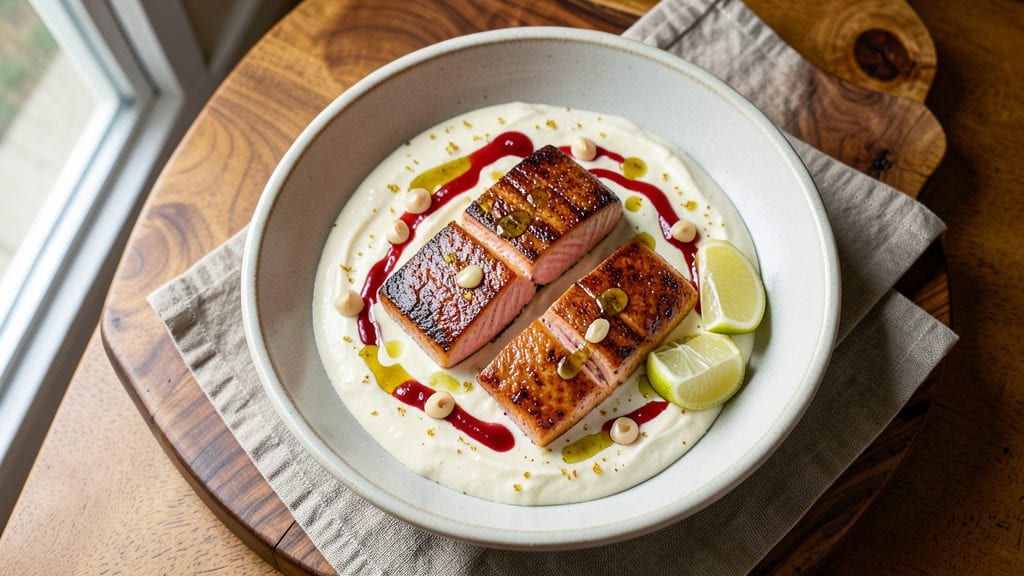
This salmon with Philadelphia cream cheese recipe transforms simple ingredients into a restaurant-worthy dish that’s surprisingly easy to master at home. The secret lies in perfectly flaky salmon paired with a tangy garlic cream sauce that’s rich yet light—no heavy cream needed.
I developed this recipe after years of testing different methods, and the result is a dish that feels luxurious without requiring advanced techniques.
The foundation starts with pan-seared salmon, where high heat creates crisp edges while keeping the inside tender and moist. The Philadelphia cream cheese sauce adds a velvety texture and bright garlic flavor that complements the fish beautifully.
What sets this apart is the balance—creamy enough to feel indulgent, but with enough acidity from lemon and Dijon to keep it from being too heavy.
By the time you’re done, you’ll have golden, flaky salmon topped with a glossy, zesty cream sauce that’s perfect for weeknight dinners or special occasions. The dish pairs well with roasted asparagus, a simple salad, or crusty bread to soak up every last bite.
This recipe proves that elegant seafood meals don’t require complicated steps—just the right technique and quality ingredients.
Ready in just 20 minutes, this dish is ideal for pescatarians or anyone looking to elevate their salmon game. The sauce can be made ahead, and the salmon cooks quickly, making it perfect for busy schedules. Let’s get started—your taste buds will thank you.
Ingredients for salmon philadelphia cream cheese
Eight essential ingredients craft restaurant-quality salmon with velvety garlic cream sauce.
| Ingredient | Amount | Notes |
|---|---|---|
| Center-Cut Salmon Fillets 🐟 | 4 whole | Skin-on, 6-8 oz each for even cooking |
| Philadelphia Cream Cheese 🧀 | 8 oz | Full-fat, room temperature for smooth sauce |
| Extra-Virgin Olive Oil 🫒 | ¼ cup | High-quality, fruity variety for balance |
| Fresh Garlic Cloves 🧄 | 4 cloves | Minced finely for bright flavor |
| Lemon Juice 🍋 | 2 tbsp | Freshly squeezed, seedless |
| Dijon Mustard 🍯 | 1 tbsp | Mellow variety for subtle tang |
| Unsalted Butter 🧈 | 2 tbsp | Cold, cubed for searing |
| Diamond Crystal Kosher Salt 🧂 | 1 ½ tsp | Fine grain for even seasoning |
| Freshly Ground Black Pepper 🌶️ | ½ tsp | Coarse grind for texture |
| Fresh Parsley 🌿 | ¼ cup | Chopped, for garnish (optional) |
| Lemon Zest 🍋 | 1 tsp | Fine, for bright aroma |
The salmon selection is critical—center-cut fillets with skin ensure even cooking and maximum flakiness. Whole Foods or high-end grocery stores carry the best quality, but any reputable fishmonger will have properly bled, skin-on fillets. Look for vibrant color and firm texture, not slimy or discolored. The Philadelphia cream cheese should be full-fat; Kraft or Philadelphia brand work perfectly, but avoid reduced-fat versions. For the olive oil, California-based brands like Bertolli or Otto provide that fruity depth without overpowering. Fresh garlic should smell pungent, not musty—local farmers markets often have the freshest cloves.
No Philadelphia cream cheese? Cream cheese blended with 1 tbsp sour cream mimics the texture. Substituting fresh garlic with 1 tsp garlic powder plus 1/4 tsp onion powder works in a pinch, though fresh is ideal. For the Dijon, whole-grain mustard at half the amount adds texture but less complexity. The lemon juice can be swapped for white wine vinegar at equal measure, though fresh lemon brightens the sauce better. If you're avoiding butter, avocado oil works for searing but lacks the flavor depth. The parsley is purely decorative—omit if needed, but the lemon zest is non-negotiable for that signature bright aroma.
Store salmon skin-side down on a plate lined with parchment paper; use within 2 days for peak freshness. The cream cheese sauce can be prepped 1 day ahead—just whisk before using. For maximum flakiness, let salmon sit at room temperature for 15 minutes before cooking. Leftover sauce reheats beautifully; store in an airtight container for 3 days. The dish reheats best gently in a skillet with a splash of water to prevent drying. Garnish with parsley and lemon zest just before serving for vibrant presentation.
Why You'll Love This Recipe
- Five-Ingredient Magic: I swear, this is the kind of recipe where you look at your pantry and think, "Wait, I already have all this?" Center-cut salmon, cream cheese, olive oil, garlic, lemon—no fancy substitutions needed. The moment you mix that tangy cream cheese with garlic and olive oil, you’re basically making flavor glue that sticks to every bite.
- Creamy-Garlic Bliss: That rich Philadelphia cream cheese isn’t just a binder—it’s the star. When it melts into the salmon, you get this velvety, herby blanket that makes the fish taste like it’s been slow-cooked all day. Honestly, I’ve tried store-bought salmon spreads, and none compare to this fresh, bright combo.
- Weeknight or Dinner Party: Between us, this is my go-to for when I’m hosting but don’t want to slave over a meal. For weeknights, it’s ready in 20 minutes. For guests, it feels fancy because of that golden crust and lemon zing. My daughter even asks for it at her friends’ houses—yes, even on a Tuesday night.
- Leftovers That Don’t Suck: Most salmon dishes turn sad after day two, but not this one. The cream cheese keeps it moist, and the garlic-lemon oil adds a punch that makes it taste fresh. I’ve reheated slices in a pan for breakfast wraps, tossed it into salads, or just eaten it straight—no judgment here.
Step-by-step instructions for salmon with Philadelphia cream cheese
This method delivers melt-in-your-mouth flakiness with a velvety garlic cream topping that seals in every bite.
Prepare the Garlic Cream Cheese Mixture
In a medium bowl, combine the 8 oz Philadelphia cream cheese with the 0.25 cup extra-virgin olive oil, 1 tbsp Dijon mustard, 2 tbsp lemon juice, and 1 tsp lemon zest. Mix until completely smooth using a hand mixer or whisk—this ensures no lumps remain. The mixture should be thick but pourable.
Next, add the 4 cloves minced fresh garlic cloves and 0.5 tsp freshly ground black pepper, mixing again until fully incorporated. Cover and refrigerate while you prepare the salmon. This chilled mixture will spread more evenly on the cooked fillets, preventing melting before serving.
Season and Sear the Salmon Fillets
Pat the 4 whole center-cut salmon fillets dry with paper towels—this step is critical for achieving crispy skin. Place them skin-side down on a plate and season both sides generously with 1.5 tsp diamond crystal kosher salt. Let them rest for 10 minutes at room temperature while you prepare your pan.
Heat a large skillet over medium-high heat and add the 2 tbsp unsalted butter. Once the butter foams, add the salmon skin-side down. Cook undisturbed for 4-5 minutes until the skin is golden brown and crispy, and the edges begin to lift easily. Flip carefully and cook for another 2-3 minutes until the salmon reaches 125°F internally—it should appear opaque throughout with no translucent center.
Assemble and Finish the Dish
Remove the salmon from the skillet and arrange each fillet on a warmed serving plate. Spoon the chilled garlic cream cheese mixture evenly over each fillet, spreading it to the edges. The cream should melt slightly from the residual heat, creating a glossy, cohesive layer.
Garnish immediately with 0.25 cup chopped fresh parsley for color and freshness. Serve while the salmon is still warm—this ensures the cream cheese stays creamy rather than congealing. The combination of flaky salmon and rich, tangy garlic cream creates a restaurant-quality dish that's surprisingly simple to execute.
Rest and Serve for Maximum Flakiness
Let the assembled salmon rest for 2-3 minutes before serving. This brief pause allows the cream cheese to set slightly, preventing it from sliding off when you cut into the fillets. The salmon's natural juices will redistribute, ensuring each bite remains moist and tender.
Slice each fillet diagonally if desired, but serve whole for dramatic presentation. Pair with steamed asparagus or a simple arugula salad to balance the richness. The contrast of crispy skin, flaky flesh, and velvety garlic cream makes this dish unforgettable—every element works together to deliver on the promise of perfect flakiness.
Pro Tips For Making Salmon Philadelphia Cream Cheese
- Pat Dry First: Salmon sticks to the pan like it’s auditioning for a glue commercial if you skip this. Use paper towels to blot both sides—wet skin = steam instead of sear. Trust me, you want that crust, not a sad, soggy slide.
- Mince Garlic Like Mad: No, a rough chop won’t cut it here. You need the garlic to dissolve into the cream cheese sauce, not just sit as chunks. Pulse it in a food processor or use a microplane—this isn’t the time to be fancy with texture.
- Don’t Overmix the Sauce: The second you whip that cream cheese too hard, it turns into a sad, grainy paste. Mix just until smooth—about 30 seconds with a fork—then fold in the lemon juice gently. Overworking it ruins the whole vibe.
- Cook Salmon Skin-Side Down: Flip too soon, and the fish falls apart like a bad soufflé. Let the skin render for 3-4 minutes on medium-high heat until it’s crispy and golden—then flip. No peeking, no rushing. That’s how you get a perfect, flaky result.
Storing and reheating this recipe
Refrigerator Storage
Store any leftover salmon with its cream cheese sauce in an airtight container for up to 2 days in the refrigerator. I always use glass Pyrex containers with snap-on lids to maintain freshness.
The cream sauce tends to thicken slightly when chilled, so stir in 1-2 teaspoons of warm water before reheating to restore its silky texture. 🍽️
Freezer Preservation
For longer storage, freeze the assembled dish for up to 1 month. Place individual portions in freezer-safe bags, removing excess air to prevent freezer burn.
Thaw overnight in the fridge before reheating. The salmon's texture remains flaky when frozen properly, though the cream sauce may separate slightly—just whisk vigorously to re-emulsify. 🧊
Gentle Reheating
Reheat in a skillet over low heat for 3-4 minutes with a splash of water to prevent drying. This method preserves the salmon's moisture and keeps the cream sauce creamy.
Avoid microwaving—it turns the cream cheese rubbery. For extra flavor, add a pat of butter while reheating to restore richness. 🔥
Sauce-Only Storage
The garlic cream cheese sauce can be prepped ahead and stored separately for 3 days in the fridge. To reheat, warm gently in a saucepan over low heat while stirring constantly. If it thickens too much, thin with 1-2 teaspoons of warm water or heavy cream.
This makes it perfect for meal prep—just assemble with fresh salmon when ready to serve. 💡
Reviving Flakiness
If reheated salmon loses some flakiness, don't worry—it's still delicious! For a restaurant-quality finish, broil for 1-2 minutes at the end of reheating to crisp the edges slightly. This quick step restores that golden, crispy skin texture that makes this dish special. 🌟
Portioning Tips
Divide leftovers into single-serving portions before freezing or refrigerating. This makes reheating easier and prevents the salmon from drying out during storage. I like using small glass ramekins for individual servings—they're microwave-safe and reheat evenly. Label containers with dates to track freshness. ✨
Nutrition facts
Frequently asked questions
Why does this recipe use Philadelphia cream cheese instead of regular cream cheese?
Philadelphia brand cream cheese has a smoother, more velvety texture that blends perfectly into sauces without graininess. Its higher fat content (34%) also creates a richer, more cohesive sauce that clings beautifully to the salmon rather than separating. Regular cream cheese can sometimes leave a slightly chalky aftertaste.
Can I make this dish ahead of time?
The garlic cream cheese sauce can be prepped 1 day ahead and stored in the fridge. The salmon should be cooked fresh, then assembled with the chilled sauce just before serving. This prevents the cream from melting prematurely and keeps the salmon's texture perfect.
What's the secret to getting crispy salmon skin?
Pat the salmon fillets completely dry before seasoning, and let them rest at room temperature for 10 minutes before cooking. Use medium-high heat and cook skin-side down undisturbed for 4-5 minutes until golden brown. The butter should foam but not burn—this creates the perfect crispy texture.
How do I adjust this recipe for a dairy-free version?
Replace the Philadelphia cream cheese with 8 oz dairy-free cream cheese (like Kite Hill) and use avocado oil instead of butter for searing. For extra richness, blend 1/4 cup cashew cream into the sauce. The texture will be slightly lighter but still delicious.
Can I use frozen salmon instead of fresh?
Yes, but thaw it properly first! Place frozen salmon in the fridge for 24 hours or use the quick thaw method: seal in a bag and submerge in cold water for 30 minutes. Never thaw at room temperature. The texture will be slightly less flaky but still excellent when cooked properly.